Country guide
US resume format: how to write a resume for American employers
An American resume is short, built around results and free of personal details that are routine elsewhere. Here is the layout US employers expect, what to leave out and why, and how federal resumes differ.
What is the standard resume format in the US?
A US resume is one or two pages, in English, with no photo. It opens with your name, city and state, phone, email and LinkedIn, then a headline and short summary, followed by work experience in reverse-chronological order, education and skills. Age, marital status and religion stay off the page. Federal jobs follow stricter rules.[1][2][3]
US resume conventions at a glance
| Topic | Usual in the US |
|---|---|
| Name of the document | Resume. A longer "CV" is usually reserved for academic, research and medical roles. |
| Length | One to two pages; a second page only when your experience needs it. Federal agencies accept two pages at most. |
| Photo | Leave it out. The EEOC says employers should not ask applicants for a photograph. |
| Personal details | No date of birth, marital status, religion or nationality. City and state are enough; no street address. |
| Dates | Month and year, or MM/DD/YYYY, used the same way throughout. Avoid shortcuts like '19. |
| Language | US English spelling (organize, color) and job titles a US reader recognizes. |
| Cover letter | Often optional. Send one when the posting asks for it or lists it as optional; 200 to 400 words. |
| References | Not on the resume. Keep a separate list for when the employer asks, with each person's permission. |
| Applicant tracking systems | Many employers screen with these systems: one column, standard headings and no text boxes or graphics. |
| Work authorization | Not required on the resume. Employers verify each new hire's identity and work authorization with Form I-9. |
Layout and section order
Start with name, city and state, phone, a professional email and a LinkedIn or portfolio link. Then a headline (the target job title or a tagline of 10 to 12 words) and an optional summary of three or four sentences using the posting's keywords. CareerOneStop, sponsored by the US Department of Labor, suggests skipping the summary if you have three years of experience or less.
Work experience follows, most recent job first: title, employer, city and state, dates, and five to eight short bullets that say what changed because of your work. Typically cover the past 10 to 15 years. Education, skills and optional sections such as certifications or volunteering close the page; recent graduates can move education up. The resume examples by role show this order filled in.
Chronological format suits a steady career in one field; combination adds a skills summary above a full work history and works for most people. A functional resume with little work history may be misread or rejected by applicant tracking systems.[2][3][4][5]
Photo and personal data: what to leave out, and why
The EEOC (Equal Employment Opportunity Commission) says pre-employment inquiries should be limited to what is essential for deciding whether a person is qualified. That is why US resumes leave out:
- Photo: employers should not ask for one; a photograph may be obtained after an offer is made and accepted.
- Date of birth and age: irrelevant to qualification, and age discrimination against people 40 or older is illegal under the laws the EEOC enforces.
- Race, national origin, religion, sex: the same guidance calls them irrelevant to hiring decisions.
- Disability or health: employers are explicitly prohibited from asking about disability before an offer.
- Social Security number: federal resume guidance says to leave it out; no private-sector resume needs it either.
State equal opportunity laws can add protections. The rule: if a detail does not show you can do the job, leave it off.
A US resume skeleton
A one-page outline with placeholder data.
Header
[First Last]
Austin, TX · (512) 555-0147 · your-name@example.com
linkedin.com/in/your-name
Headline
Operations Analyst | Supply chain reporting and process improvement
Summary
Five years improving warehouse and order data for a regional distributor. Builds the reports managers use every week and turns them into process changes.
Work experience
Operations Analyst · [Company], Austin, TX · 06/2021 – Present
Rebuilt the weekly inventory report so store managers could see stock-outs a day earlier.
Operations Coordinator · [Company], Dallas, TX · 08/2019 – 05/2021
Education
B.S. Business Administration · [University], TX · 2019
Skills
SQL · Excel (pivot tables, Power Query) · Tableau · Inventory planning
Example with placeholder details, not a real person
Use real numbers you can explain in an interview.
Federal resumes: different rules for government jobs
Federal applications through USAJOBS are stricter. Include everything the vacancy announcement asks for.
| Item | Federal resume | Private-sector resume |
|---|---|---|
| Length | Two pages at most, to comply with the Merit Hiring Plan | One to two pages |
| Each job | Employer, title, start and end month and year, hours per week; series and grade for federal jobs | Title, employer, location, dates |
| Leave out | Photos, Social Security number, age, sex, religion, classified information | Photo and personal details |
The USAJOBS Resume Builder covers the required fields; you can also upload your own file.
How to write a US resume in six steps
Write one strong base version, then adapt it to each posting.
- 01
Read the posting first
Mark the required skills and the employer's wording. The job description keyword matcher shows which terms your draft is missing.
- 02
Write the header and headline
Name, city and state, phone, email and LinkedIn, then the target job title or a short tagline. No photo, no date of birth.
- 03
List your experience, newest first
Title, employer, location and consistent dates, then bullets that start with an action and end with a result.
- 04
Add education and skills
Degree, school and year; then the hard skills the posting names. Spell out unfamiliar acronyms once.
- 05
Format for people and systems
One column, standard headings, 10 to 12 point text, nothing important in the header or footer. Save as PDF unless another format is requested.
- 06
Tailor and check before you send
Adjust the summary and bullets to each posting, or let Ruubu tailor your resume to the job posting. Then run a free resume check for missing sections and keywords.
Templates that suit US employers
All four are single-column and photo-free. Fill one in and download a PDF.
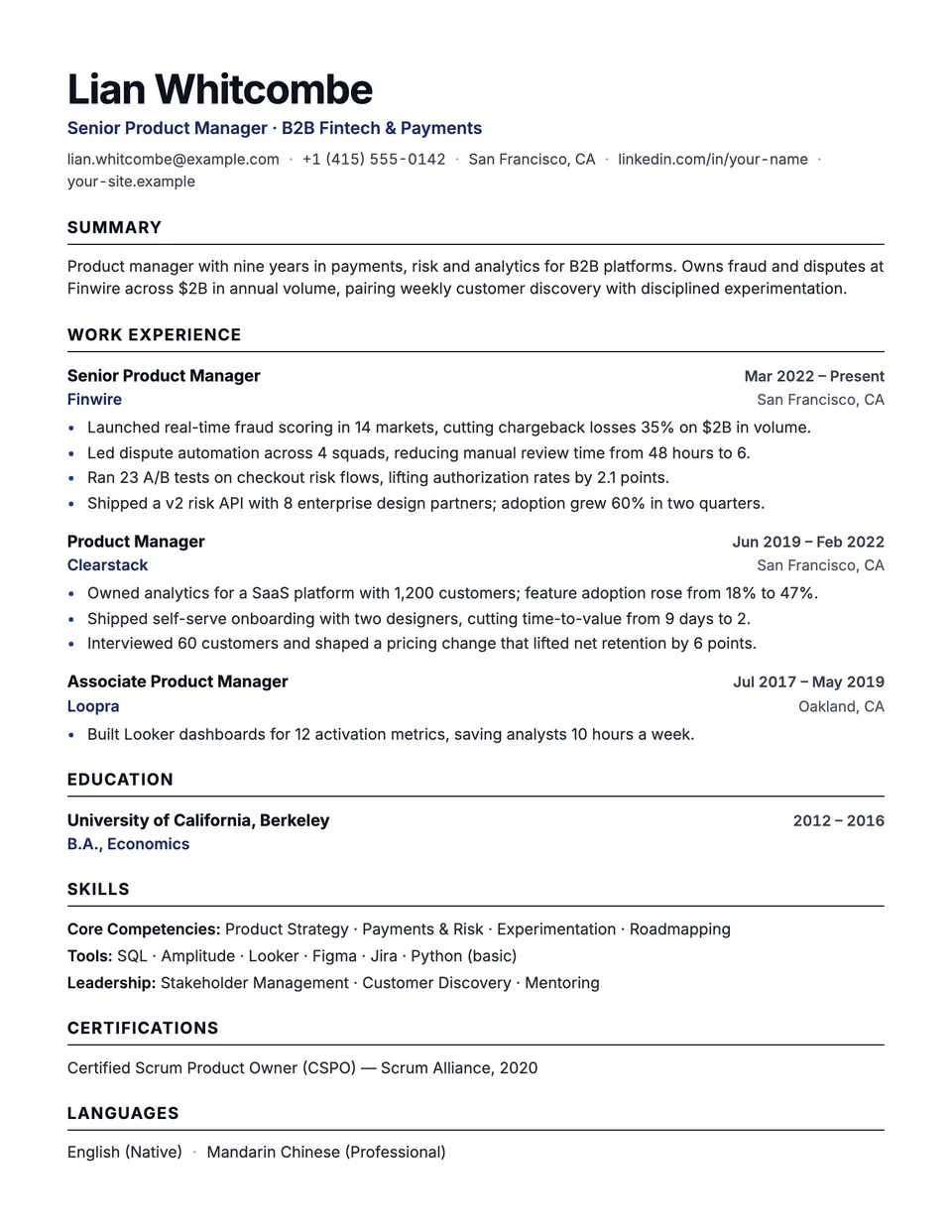
Beacon
Clean and modern, title and dates on one line: a safe default for most industries.
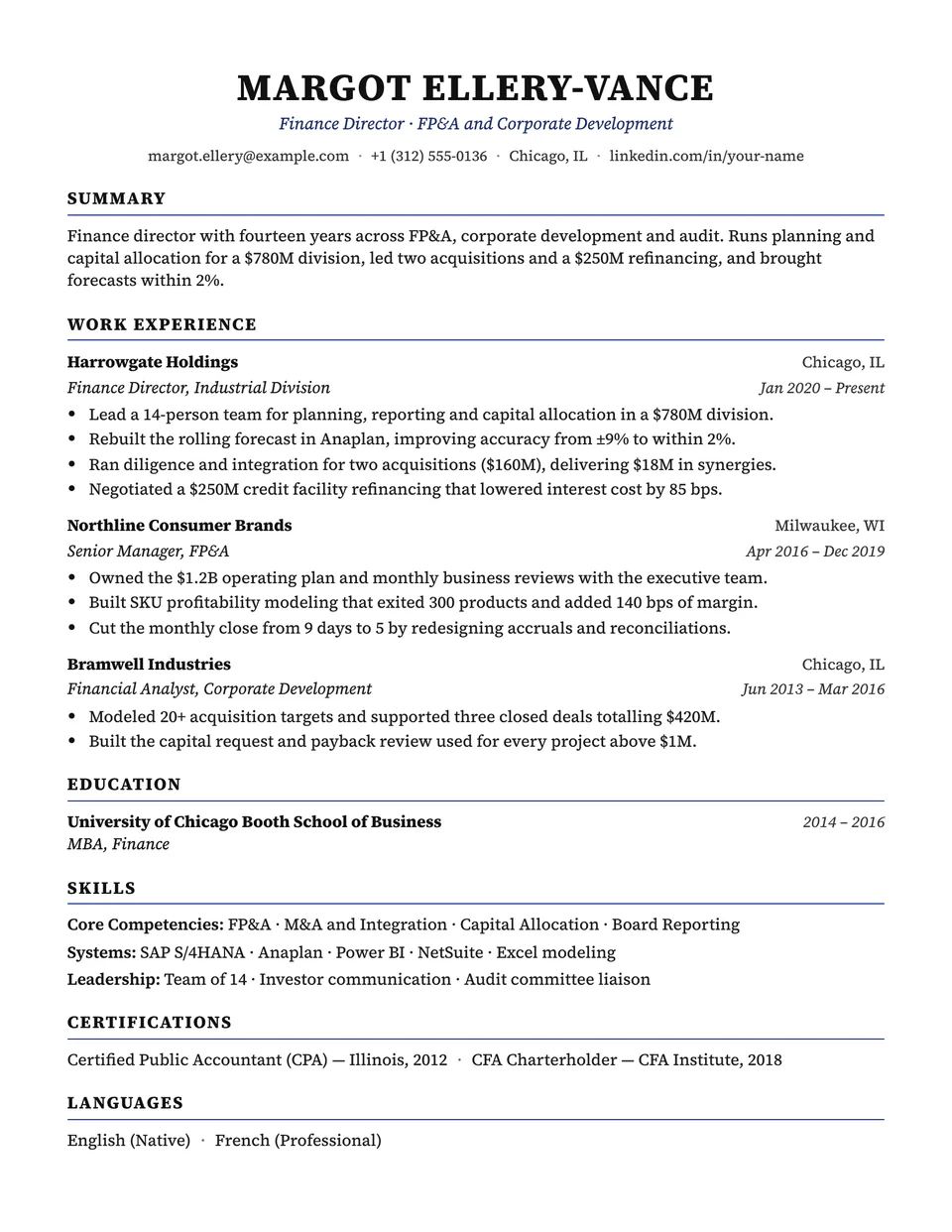
Charter
The traditional US look with a centered serif name, suited to finance, law and corporate roles.
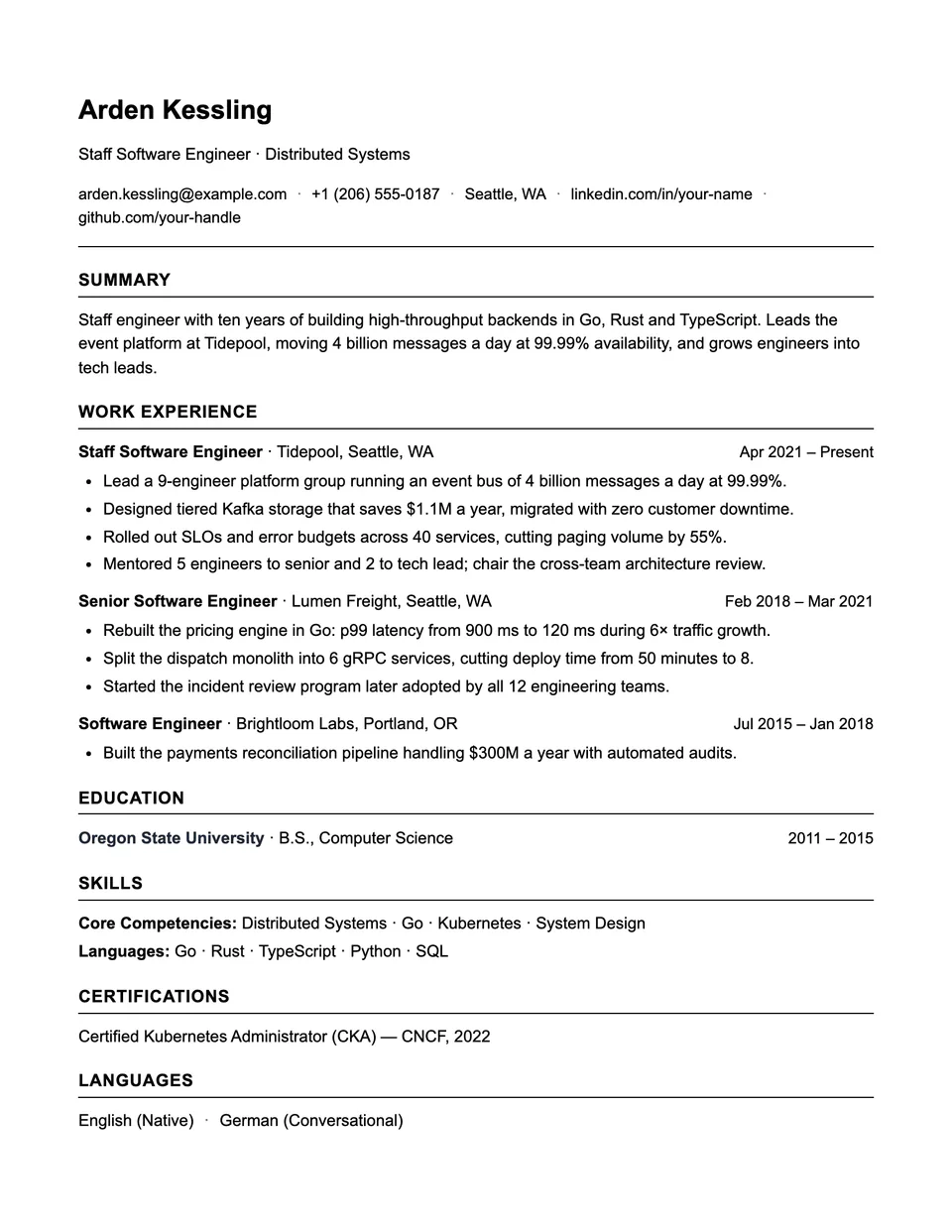
ATS Plain
No color, plain rules: for large employers that screen through online application systems.
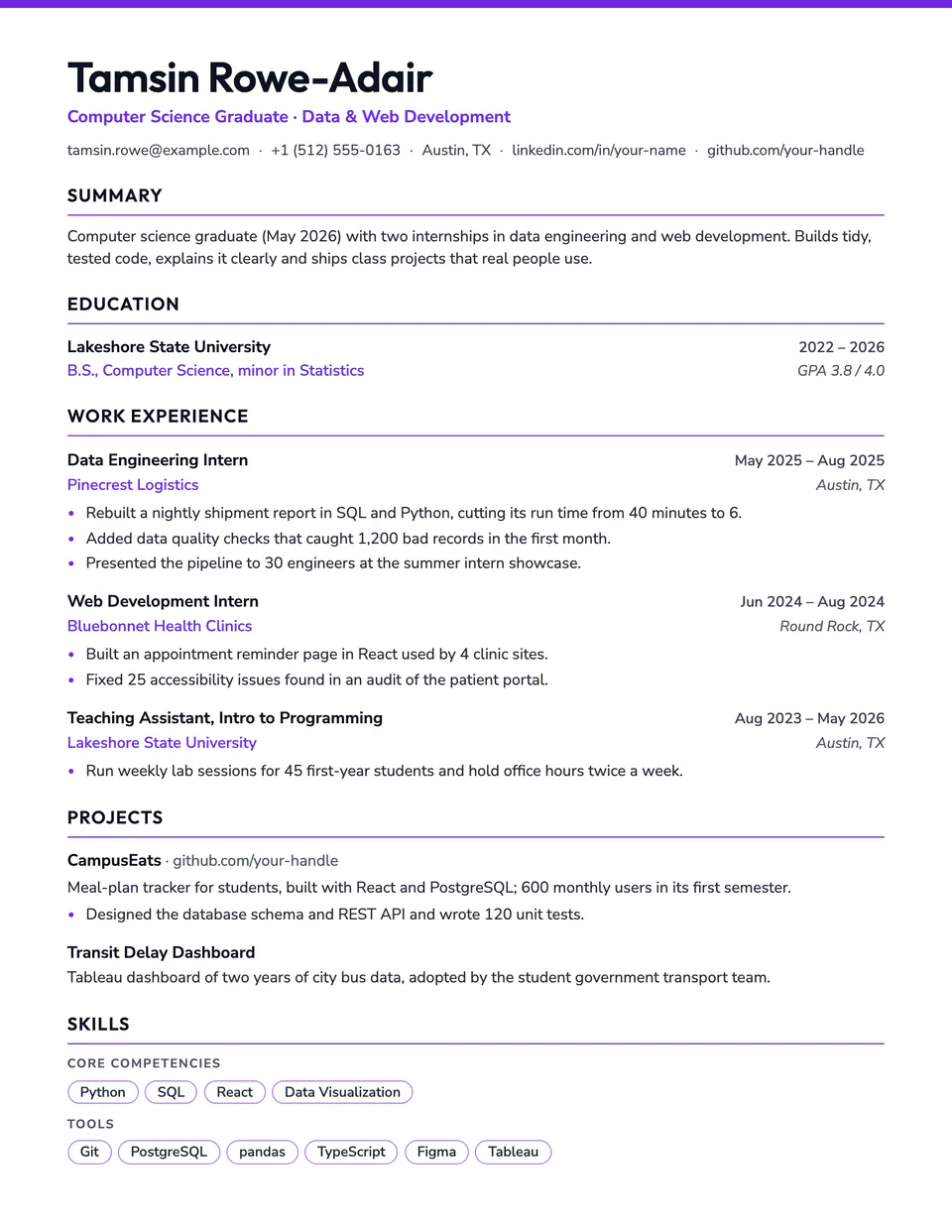
Campus
Education, projects and internships up front, for students and recent graduates.
Cover letters and the application package
Many US employers do not ask for a cover letter. Write one when the posting asks for it, and add one when it is optional: it shows your match, explains a gap or says why this employer interests you. When you email a resume, the email body can be the letter.
Keep it to 200 to 400 words in three or four short paragraphs, addressed to a named person or a job title, not "To Whom It May Concern". Ruubu's cover letter generator drafts one from your resume and the posting for you to edit. References go on a separate sheet, listing only people who agreed to be contacted.[6][7]
Where to find jobs in the US
The Department of Labor's CareerOneStop Job Finder gathers postings from employers and state job banks through the National Labor Exchange. For federal government jobs, USAJOBS is the central place to find openings in federal agencies; some agencies outside the competitive service also post on their own websites.
Private job boards such as Indeed, LinkedIn and Glassdoor list many roles too, as do employers' own careers pages.[8][9]
Applying from abroad
According to USCIS, people living outside the United States generally must apply for a visa from the US Department of State to work, and must comply with the conditions of any work authorization. Check your category on the USCIS Working in the United States page. Every new hire completes Form I-9 so the employer can verify identity and work authorization.
Give a foreign degree its plain English name. For federal jobs, foreign education must be evaluated by a private organization that specializes in foreign credentials. Write in US English, and use resume translation if your current version is in another language.[11][12][13]
Common mistakes on US resumes
- Adding a photo, date of birth or marital status out of habit.
- Sending a three-page resume to a private employer when two pages would hold everything relevant.
- Using a functional format that hides your work history.
- Contact details in the page header, or tables and text boxes that online systems may scramble.
- Duties without results, or the same resume for every posting.
Frequently asked questions
- Should I put a photo on a US resume?
- No. Photos are not part of the US format, and the Equal Employment Opportunity Commission says employers should not ask applicants for a photograph; one may be obtained after an offer is made and accepted. Keep the resume text only; if you want a picture somewhere, put it on your LinkedIn profile.
- How long should a resume be in the US?
- One to two pages. CareerOneStop advises using a second page only when your amount of experience makes it necessary, so students and early-career applicants usually fit on one. Federal agencies only accept resumes of up to two pages, so trim older roles before uploading to USAJOBS. Whatever the length, keep full detail for the last 10 to 15 years.
- Do I need a cover letter for US jobs?
- Not always. Many US employers do not ask for one. Write one whenever the posting requests it, and include one when it is optional: it lets you show your match to the job or explain a gap. Keep it to 200 to 400 words, addressed to a person or a job title, and tailor it to each employer.
- Should I mention my visa status or work authorization on my resume?
- It is not required. Employers verify every new hire's identity and work authorization through Form I-9. If you already hold authorization and your address or past jobs are abroad, a short line in your cover letter can prevent confusion. Never overstate your status, and check the official USCIS pages for the rules of your category.
- Is a CV the same as a resume in the US?
- Not quite. In the US, a resume is the short, tailored document used for most jobs. A CV is longer, listing publications, research, grants and teaching, and is mainly used for academic, scientific and medical roles. If a non-academic posting asks for a CV, a one- or two-page resume is usually what is meant.
Sources
Statements about rules and official guidance rely on these pages. We opened and read each source ourselves on the date shown.
- [1]Prohibited Employment Policies/Practices · U.S. Equal Employment Opportunity Commissionwww.eeoc.gov/prohibited-employment-policiespractices ·
- [2]Resume Writing Guide: Formatting · CareerOneStop, U.S. Department of Laborwww.careeronestop.org/JobSearch/Resumes/ResumeGuide/formatting.aspx ·
- [3]Resume Writing Guide: Top section · CareerOneStop, U.S. Department of Laborwww.careeronestop.org/JobSearch/Resumes/ResumeGuide/top-portion-of-resume.aspx ·
- [4]Resume Writing Guide: Work experience · CareerOneStop, U.S. Department of Laborwww.careeronestop.org/JobSearch/Resumes/ResumeGuide/work-experience.aspx ·
- [5]Resume Writing Guide: Special tips · CareerOneStop, U.S. Department of Laborwww.careeronestop.org/JobSearch/Resumes/ResumeGuide/special-tips.aspx ·
- [6]Cover letters · CareerOneStop, U.S. Department of Laborwww.careeronestop.org/JobSearch/Resumes/cover-letters.aspx ·
- [7]References · CareerOneStop, U.S. Department of Laborwww.careeronestop.org/JobSearch/Resumes/references.aspx ·
- [8]Job Finder · CareerOneStop, U.S. Department of Laborwww.careeronestop.org/Toolkit/Jobs/find-jobs.aspx ·
- [9]Federal employment · CareerOneStop, U.S. Department of Laborwww.careeronestop.org/JobSearch/FindJobs/federal-employment.aspx ·
- [10]Tips for Building an Effective Resume · U.S. Department of the Treasuryhome.treasury.gov/about/careers-at-treasury/how-to-apply/resume-tips ·
- [11]Working in the United States · U.S. Citizenship and Immigration Serviceswww.uscis.gov/working-in-the-united-states ·
- [12]I-9, Employment Eligibility Verification · U.S. Citizenship and Immigration Serviceswww.uscis.gov/i-9 ·
- [13]Education Outside the U.S. · Presidential Management Fellows Program, U.S. Office of Personnel Managementwww.pmf.gov/become-a-pmf/eligibility/education-outside-us/ ·
Keep reading
Ready to apply for a US job?
Check your resume for free, then tailor it and your cover letter to the posting you want.