Country guide
Canadian resume format: how to write a resume for Canada
A Canadian resume looks a lot like an American one, with a few differences that trip up newcomers: what to do with references, why your Social Insurance Number never goes on it, and how human rights law shapes what employers may ask. This guide follows Government of Canada advice wherever it exists.
What is the standard resume format in Canada?
A Canadian resume is at most two pages and lists your name, address, email and phone, then work experience and achievements related to the job, education and credentials. Leave out age, marital status and a photo, which Job Bank says is not the norm in Canada. Never include your Social Insurance Number, and keep references on a separate sheet.[1]
Canadian resume conventions at a glance
| Topic | Usual in Canada |
|---|---|
| Name of the document | Resume. "CV" is mostly heard in academic and research hiring. |
| Length | Two pages at most, according to Job Bank, the Government of Canada's job site. |
| Photo | Leave it out. Job Bank notes that a photo may be acceptable in some countries but is not the norm in Canada. |
| Personal details | Leave out age, weight, height and marital status. Never include your Social Insurance Number. |
| Contact details | Name, address, email and phone number, checked so the employer can actually reach you. |
| Dates | Month and year for each role, written the same way throughout, most recent first. |
| Language | English or French. Match the language of the job posting unless it asks otherwise. |
| Cover letter | Commonly sent with the resume. Keep it concise and tailored; you may need a different letter for each job. |
| References | On a separate sheet, provided only when the employer specifically asks. |
| Applicant tracking systems | Many applications go through online systems; one column and clear headings keep yours readable. |
Layout and section order
Job Bank says a resume should generally include your contact information, objective, work experience, education and credentials. In practice the order runs: name and contact details; a short profile or objective written for the job; work experience, most recent first, with your title, employer, city and province and dates; education and credentials; then skills, languages and volunteer work if they support the application.
Under each job, Job Bank's advice is to specify the experience or achievements related to the position you are applying to, rather than listing every duty. Put the emphasis on recent experience, use firm numbers an employer will understand, and cut or minimize jobs more than 15 years old. Look at the resume examples by role to see how the same structure works for different jobs.[1][2]
Photo and personal data: the legal background
The Canadian Human Rights Act lists the prohibited grounds of discrimination: race, national or ethnic origin, colour, religion, age, sex, sexual orientation, gender identity or expression, marital status, family status, genetic characteristics, disability, and a conviction for which a pardon or record suspension has been granted. Section 8 makes it a discriminatory practice to use an application form, or make any written or oral inquiry, that expresses or implies a limitation or preference based on those grounds.
That Act covers matters within federal jurisdiction. Other employers fall under provincial human rights codes. Ontario's Human Rights Commission, for example, says employers must not use an application form or ask applicants questions to find out about prohibited grounds, and that asking for "Canadian experience" can result in discrimination. Employers should consider all of your work experience, in any country.
So the Canadian resume simply leaves those details out: no photo, no date of birth, no marital status or family details, no religion. And Job Bank says never to include your Social Insurance Number.[1][4][5]
A Canadian resume skeleton
A one-page outline with placeholder data. Note what is missing: no photo, no date of birth, no references.
Header
[First Last]
Toronto, ON · (416) 555-0123 · your-name@example.com
linkedin.com/in/your-name
Profile
Payroll specialist with six years of multi-province payroll for 300 employees. Bilingual English and French.
Work experience
Payroll Specialist · [Company], Toronto, ON · 03/2021 – Present
Moved biweekly payroll to a new system with no missed pay dates during the switchover.
Payroll Administrator · [Company], Montréal, QC · 09/2018 – 02/2021
Education and credentials
Bachelor of Commerce · [University], 2018
Payroll certification · [Association], 2020
Skills and languages
Ceridian Dayforce · Excel · English (fluent) · French (fluent)
Example with placeholder details, not a real person
Your references sit on a separate page, ready for when an employer asks.
How to write a Canadian resume in six steps
Write a strong base version once, then adjust it for each job.
- 01
Study the posting
Note the required skills, credentials and the employer's wording. The job description keyword matcher lists the terms your draft is missing.
- 02
Write accurate contact details
Name, address, email and phone. Job Bank warns that the employer cannot contact you if these are wrong.
- 03
Describe relevant experience
Most recent first. For each role, keep the achievements that relate to this position and drop unrelated duties.
- 04
Show education and credentials
Give foreign degrees their plain English or French name, and mention a credential assessment if you have one.
- 05
Remove what does not belong
No photo, age, marital status or Social Insurance Number. References go on a separate sheet.
- 06
Tailor and check
Let Ruubu tailor your resume to the job posting, then run a free resume check before you apply.
Templates that suit Canadian employers
Single-column, photo-free layouts that keep to two pages. Fill one in and download a PDF.
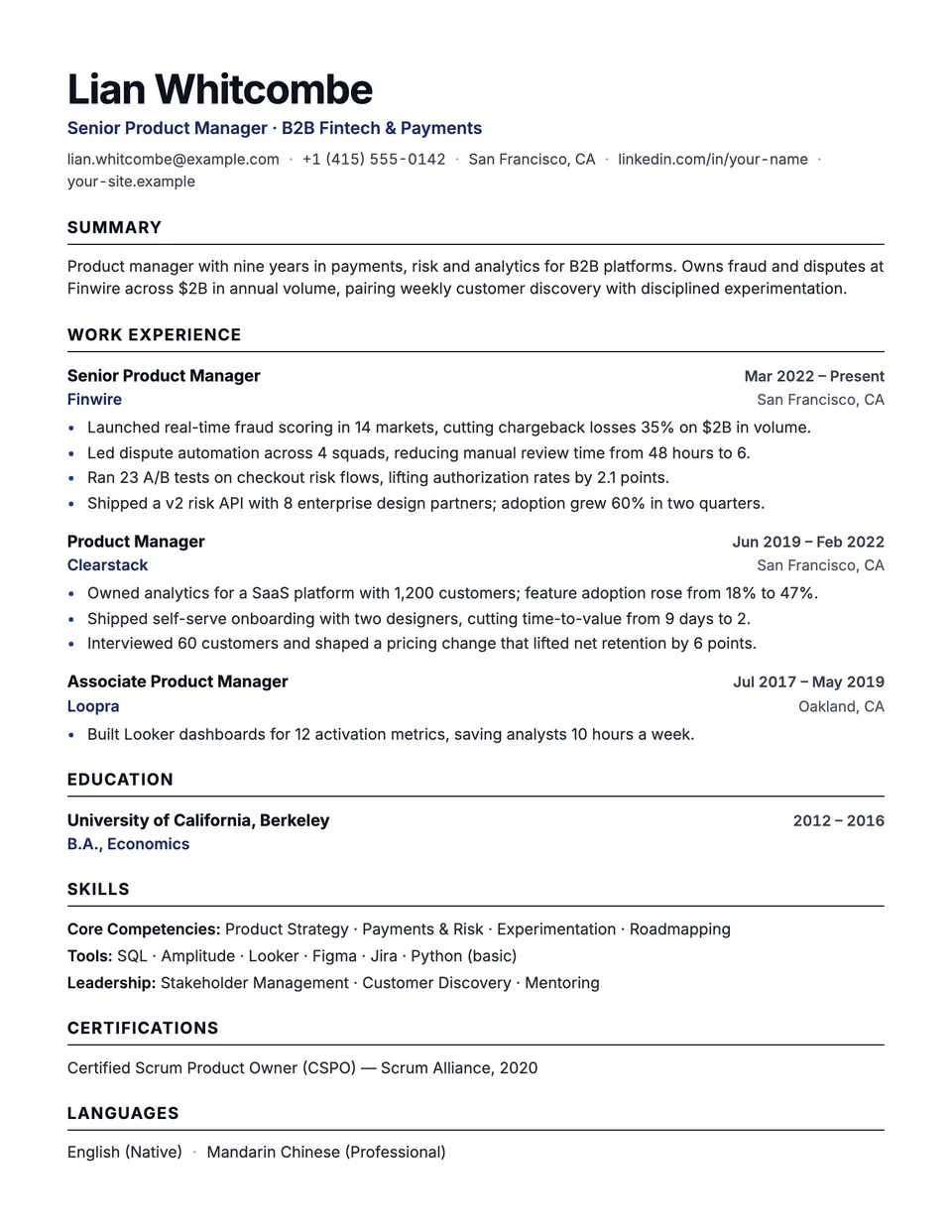
Beacon
A clean modern default for most Canadian industries, with title and dates on one line.
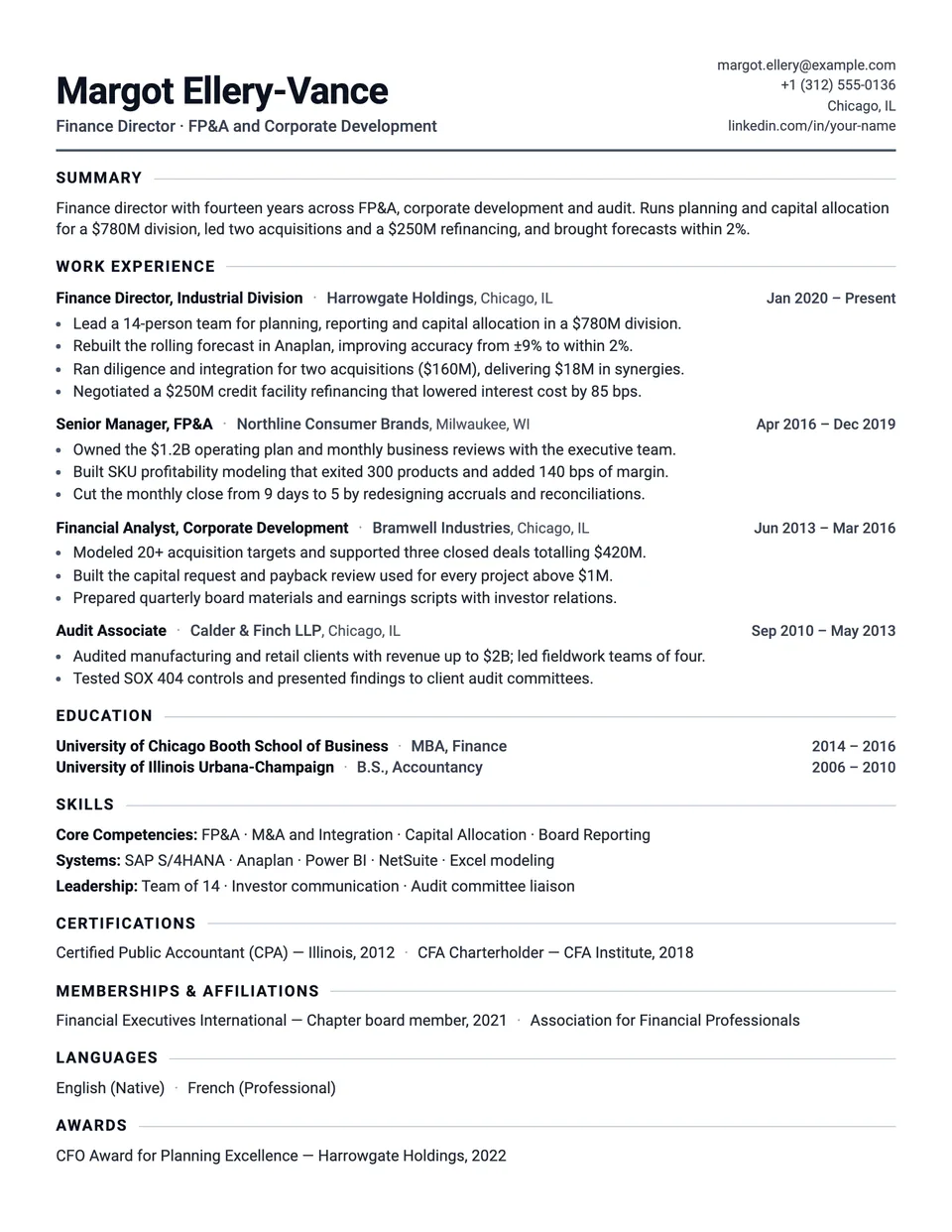
Tempo
Dense and tidy, for a long career that still has to fit within Job Bank's two-page limit.
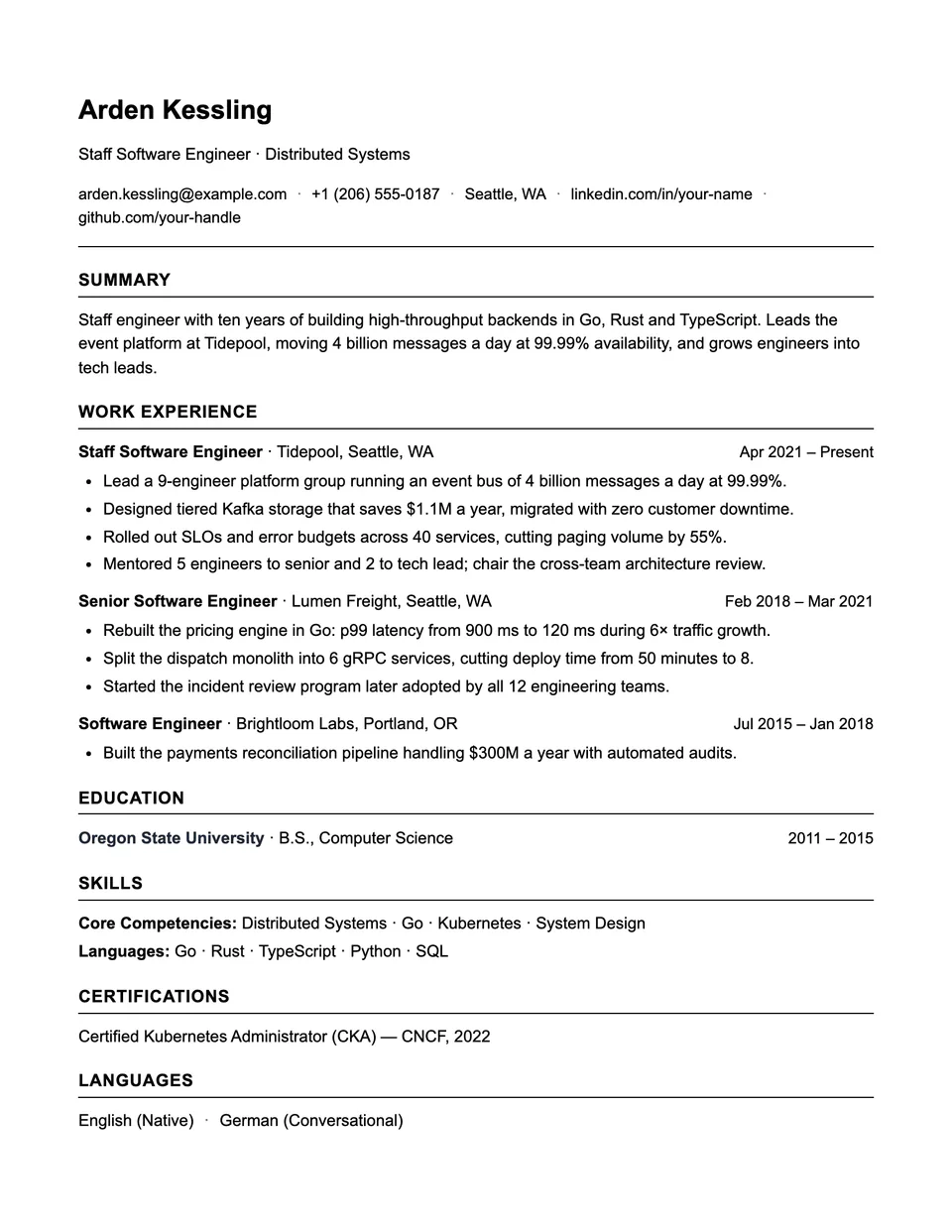
ATS Plain
Plain and colorless, for employers that screen applications through online systems.
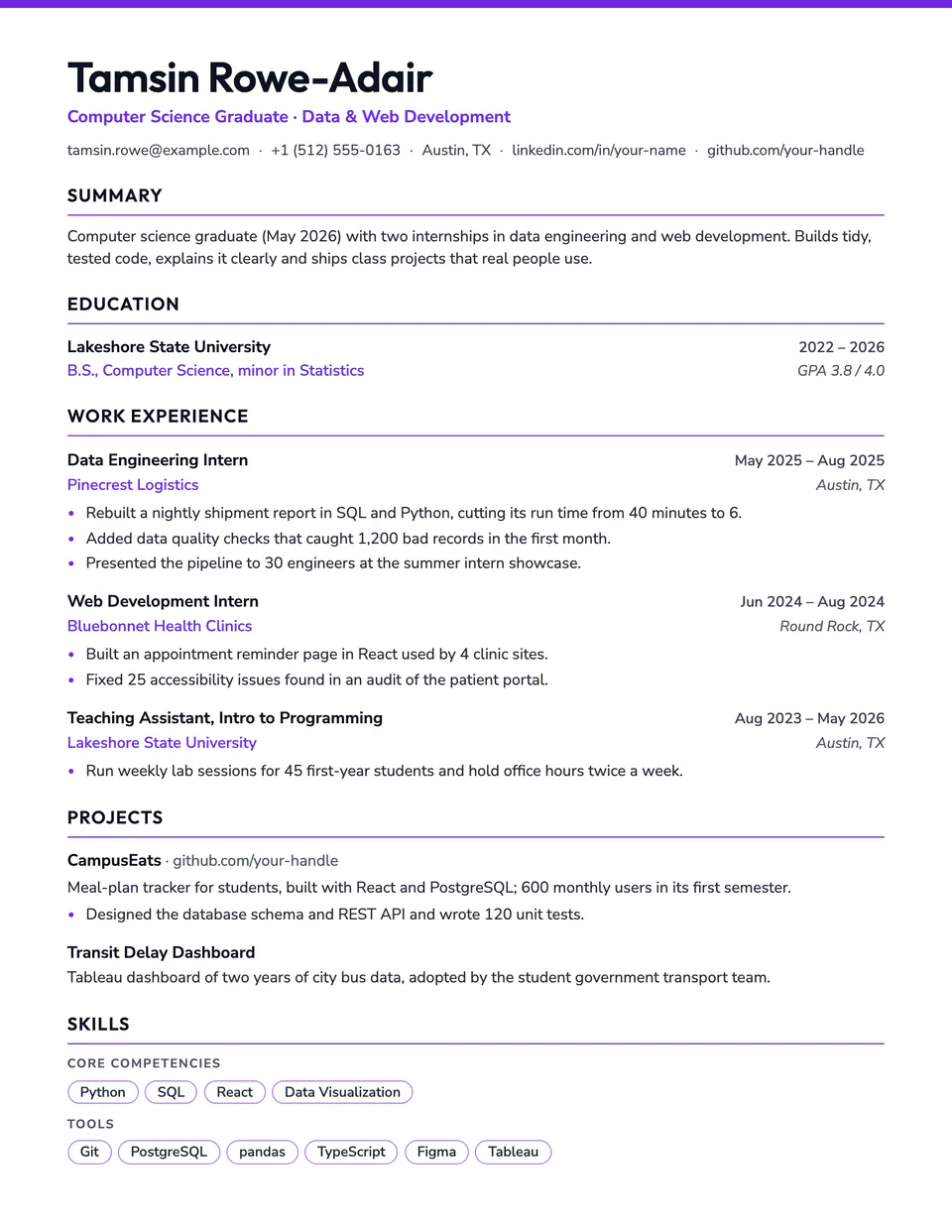
Campus
Education, co-op terms and projects up front, for students and new graduates.
Cover letters and references
A cover letter is a normal part of a Canadian application. Job Bank says it should be concise, well written and tailored to the company and job, that you may need a different letter for each job, and that it should give the employer an idea of who you are and the skills you offer. Ruubu's cover letter builder starts from your resume and the posting.
References are handled separately. Job Bank's advice is to keep them on a separate sheet and provide them only when specifically requested. Ask each person first and tell them which jobs you have applied for.[1][2]
Where to find jobs in Canada
Job Bank is the Government of Canada's job listing site, with job search, Job Match and job alerts. Job Bank also suggests employers' own careers pages, recruiting agencies, job fairs and networking, in person or through LinkedIn and professional associations.
Private job boards such as Indeed and LinkedIn list many Canadian roles as well.[3]
Applying from abroad
Immigration, Refugees and Citizenship Canada (IRCC) describes two kinds of work permit: an employer-specific permit, which requires a job offer, and an open permit, which does not. It also lists the cases where you can work without one. Start from the official Work in Canada page to see which applies to you.
If you plan to work in a regulated occupation or compulsory trade, your credentials must be recognized first by the regulatory authority in the province or territory where you will work, and you will need a licence or certification to practise. The Government of Canada recommends contacting that regulator, ideally before you arrive, and its Foreign Credential Recognition page links to a tool that checks whether your occupation is regulated.
Write the resume in the language of the posting. If your current version is in another language, Ruubu's resume translation gives you a starting point to review.[6][7]
Common mistakes on Canadian resumes
- Including a photo, date of birth or marital status out of habit from another country.
- Writing your Social Insurance Number anywhere on the resume.
- Listing referees' names and phone numbers on the resume itself.
- Running to three or more pages.
- Describing every duty instead of the achievements that relate to this job.
- Leaving a regulated profession's licensing status unclear when the job requires it.
Frequently asked questions
- Do I need a photo on a Canadian resume?
- No. Job Bank, the Government of Canada's job site, notes that although a photo may be acceptable in some countries, it is not the norm in Canada. Human rights laws also bar application forms and inquiries that express a preference based on grounds such as race, colour, age or sex. Keep the resume text only and let your experience speak.
- How long should a Canadian resume be?
- Two pages at most, according to Job Bank. Early-career applicants often fit everything on one page. If you have a long career, keep full detail for recent and relevant roles, shorten older ones to a line, and leave out anything that does not relate to the position you are applying to.
- Should I put references on my resume in Canada?
- No. Job Bank recommends keeping references on a separate sheet and providing them only when an employer specifically asks. Prepare that sheet in advance with each person's name, title, organization and contact details, and ask them first. Tell your references which jobs you have applied for so they are ready for a call.
- Do employers in Canada require Canadian experience?
- Some postings still ask for it, but Ontario's Human Rights Commission says asking for Canadian experience can result in discrimination, and that employers should consider all of your work experience, in any country. On your resume, describe foreign roles in terms a Canadian employer understands: the size of the organization, your responsibilities and concrete results.
- Do I need my foreign credentials recognized before applying?
- For a regulated occupation or compulsory trade, yes: the provincial or territorial regulator must recognize your credentials, and you need a licence or certification to practise. For other jobs, ask the employer what they need; mentioning an assessment can help them read your degree. The Government of Canada's Foreign Credential Recognition tool shows whether your occupation is regulated where you plan to work.
Sources
Statements about rules and official guidance rely on these pages. We opened and read each source ourselves on the date shown.
- [1]How to write a good resume · Job Bank, Government of Canadawww.jobbank.gc.ca/findajob/resources/write-good-resume ·
- [2]Apply for jobs · Job Bank, Government of Canadawww.jobbank.gc.ca/findajob/resources/apply-for-jobs ·
- [3]Search for jobs · Job Bank, Government of Canadawww.jobbank.gc.ca/findajob/resources/search-for-jobs ·
- [4]Canadian Human Rights Act (R.S.C., 1985, c. H-6) · Justice Laws Website, Government of Canadalaws-lois.justice.gc.ca/eng/acts/h-6/page-1.html ·
- [5]Removing the "Canadian experience" barrier · Ontario Human Rights Commissionwww.ohrc.on.ca/en/learning/human-rights-and-newcomers/removing-canadian-experience-barrier ·
- [6]Work in Canada · Immigration, Refugees and Citizenship Canadawww.canada.ca/en/immigration-refugees-citizenship/services/work-canada.html ·
- [7]Foreign Credential Recognition · Employment and Social Development Canadawww.canada.ca/en/employment-social-development/programs/foreign-credential-recognition.html ·
Keep reading
Applying for a job in Canada?
Check your resume for free, then tailor it and your cover letter to the posting you want.