Country guide
Australian resume format: how to write a resume (CV) for Australia
Australians say resume and CV interchangeably, and the document is usually longer and more detailed than an American resume. Referees, key selection criteria and British spelling are the details that set it apart. This guide follows Australian government advice wherever it exists.
What is the standard resume format in Australia?
An Australian resume is usually reverse-chronological and more detailed than a US one: the Victorian Government says employers generally prefer two to four pages. It opens with contact details and a short career overview, then employment history, education and referees. Leave out age, marital status and religion, tailor it to each job, and use British English spelling.[1]
Australian resume conventions at a glance
| Topic | Usual in Australia |
|---|---|
| Name of the document | Resume or CV; both words are used for the same document. |
| Length | Two to four pages, according to the Victorian Government's guide; one Victorian council asks for two to three. |
| Photo | Leave it out. The University of Queensland's employability team says a resume should not include your photograph unless you are applying to be a model. |
| Personal details | Name, address, phone and email. Leave out date of birth, marital status, gender, religion, nationality and children or carer responsibilities. |
| Order and dates | Reverse-chronological: most recent role first, with dates written consistently. |
| Language | British English spelling, following an Australian dictionary (organisation, licence). |
| Cover letter | Usually sent with the resume; no more than one page. |
| Referees | Two or three at the end of the resume, or "available upon request". Ask them first. |
| Key selection criteria | Many government and community-sector jobs ask for a written response, on a separate page. |
| Applicant tracking systems | Applications are often lodged on a website: clear headings and a simple layout keep yours readable. |
Layout and section order
The Victorian Government's guide for skilled migrants suggests this structure. An introduction with your name and contact details, a brief career overview of your main qualifications and relevant experience, and an optional career objective. Employment history, most recent first, including volunteer work: list your title and some organisational context, account for gaps, describe duties in plain English and mention several verifiable accomplishments, then consolidate older or less relevant roles at the bottom.
Education and qualifications come next, most important first, followed by professional memberships and your referees. Employers in Australia want a detailed picture of past experience and skills, not just a list of qualifications and positions, which is why Australian resumes run longer than American ones. The resume examples by role show the same sections filled in for different jobs.
Do not attach certificates or transcripts unless the ad asks for them. Both the Victorian Government and the City of Ballarat suggest bringing originals or letters of commendation to the interview instead.[1][2]
Photo and personal data: what to leave out, and why
The Australian Human Rights Commission says workplace rights protected under the Fair Work Act and federal anti-discrimination laws include being hired, trained and promoted on merit, and that discrimination means less favourable treatment because of characteristics such as race, sex, age, disability or religion. Australian resumes therefore leave out:
- Date of birth and age: the Victorian Government says there is no need to include them.
- Marital status, gender, children or carer responsibilities: not relevant to whether you can do the job.
- Religious beliefs and nationality: likewise left off.
- Photo: the University of Queensland's employability guidance says not to include one unless you are applying to be a model.
- Driver's licence: only when the role requires it, together with other mandatory checks such as a Working With Children Check.
If the job requires something, such as a licence or a check, list it. If it does not, leave it out.
An Australian resume skeleton
The first page of an outline with placeholder data. Referees close the document.
Header
[First Last]
Brisbane QLD · 04xx xxx xxx · your-name@example.com
linkedin.com/in/your-name
Career overview
Registered nurse with seven years in acute medical wards. Experienced preceptor for graduate nurses.
Employment history
Clinical Nurse · [Hospital], Brisbane QLD · Feb 2022 – Present
Medical ward, 32 beds. Preceptor for graduate nurses each intake.
Led the ward's falls-prevention audit and presented the findings to the nursing team.
Registered Nurse · [Hospital], Townsville QLD · Jan 2018 – Jan 2022
Education and qualifications
Bachelor of Nursing · [University], 2017
Referees
[Name], Nurse Unit Manager, [Hospital] · 04xx xxx xxx · referee@example.com
[Name], Clinical Nurse Consultant, [Hospital] · available on request
Example with placeholder details, not a real person
Write the whole document in Australian spelling: organisation, licence, programme.
Key selection criteria
Many Australian government and community-sector jobs ask you to address key selection criteria: a short written response showing how you meet each requirement. The City of Ballarat warns that leaving the response out may mean your application is treated as incomplete and screened out.
The Victorian Government advises writing the responses on a separate page and using specific examples from your skills and work experience for each criterion. It takes time, but when the ad asks for it, it is part of the application.[1][2]
How to write an Australian resume in six steps
Build one detailed base version, then tailor it to each ad.
- 01
Read the ad and position description
Note the skills, mandatory requirements and any selection criteria. The job description keyword matcher lists the terms your draft is missing.
- 02
Write the introduction
Name, contact details and a brief career overview. Add a career objective only if it helps the reader.
- 03
Describe your employment history
Most recent first, with organisational context, plain-English duties and verifiable achievements. Explain gaps.
- 04
Add education, memberships and referees
Most important qualification first. Choose two or three referees you reported to and ask their permission.
- 05
Check spelling and personal details
Use Australian (British) spelling and remove age, marital status, religion and anything else the job does not need.
- 06
Tailor and check
Let Ruubu tailor your resume to the job ad, then run a free resume check before you apply.
Templates that suit Australian employers
Photo-free layouts that stay readable over two to four pages. Fill one in and download a PDF.
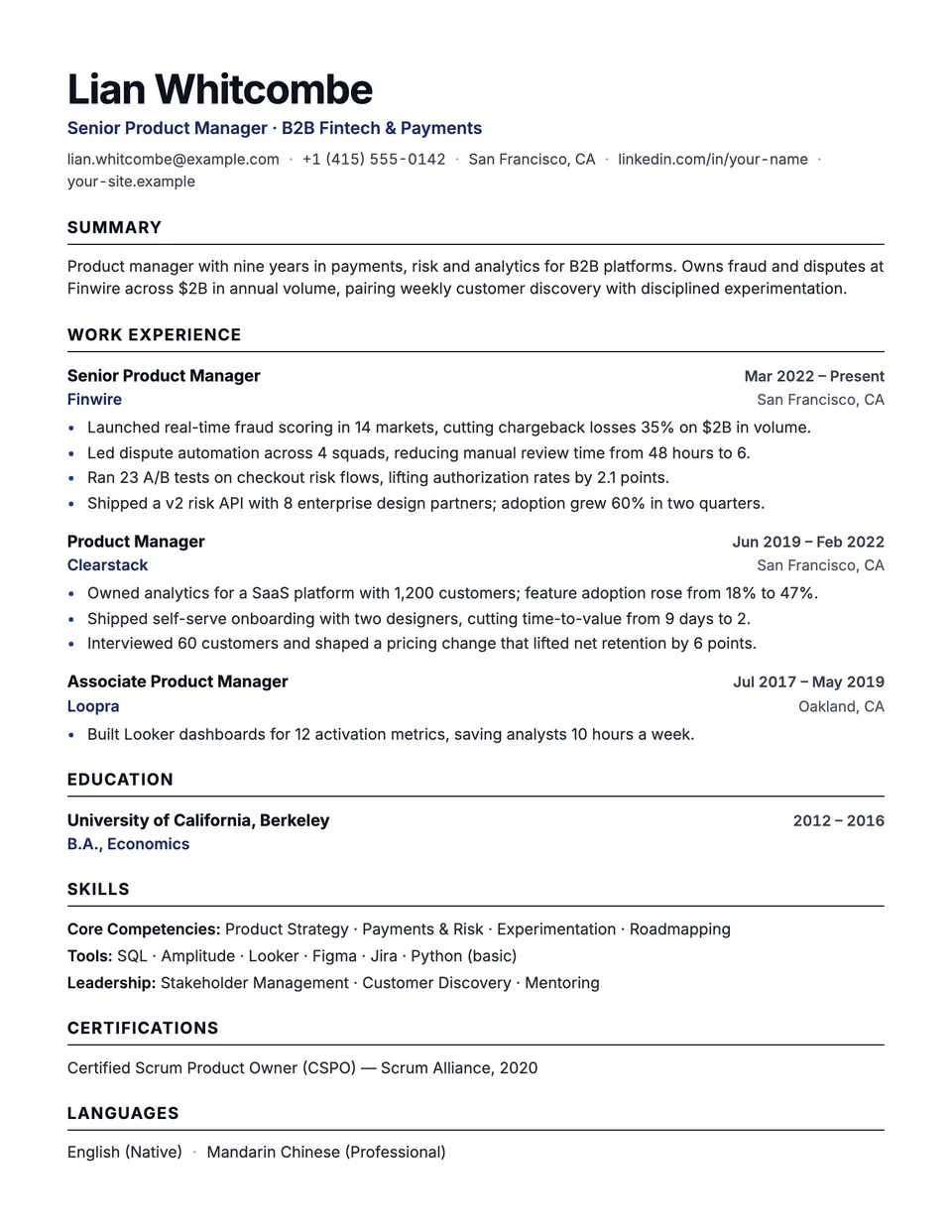
Beacon
A clean modern default with title and dates on one line, easy to scan across several pages.
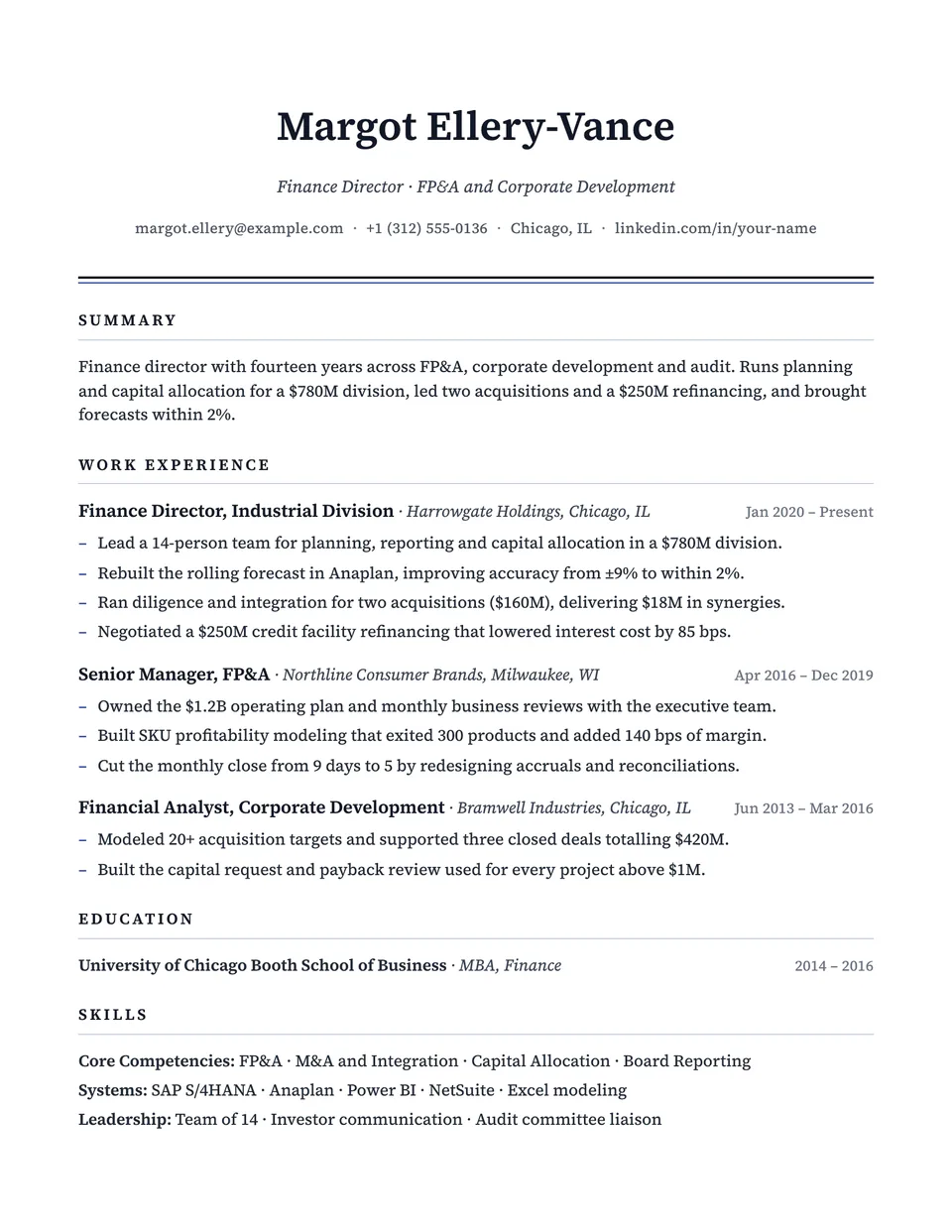
Executive
A refined serif letterhead for finance, law and senior corporate roles.
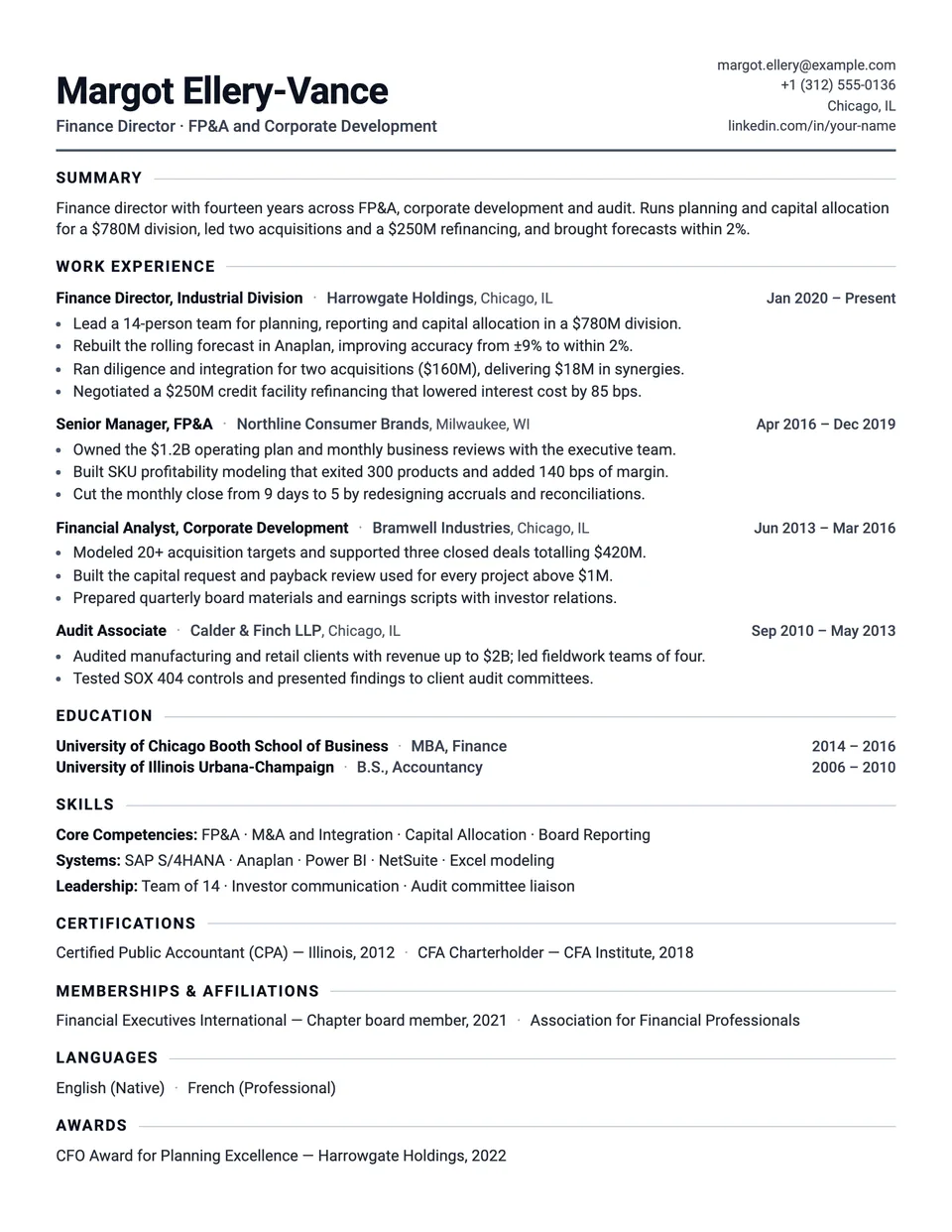
Tempo
Dense and tidy when you want a long career to fit on fewer pages.
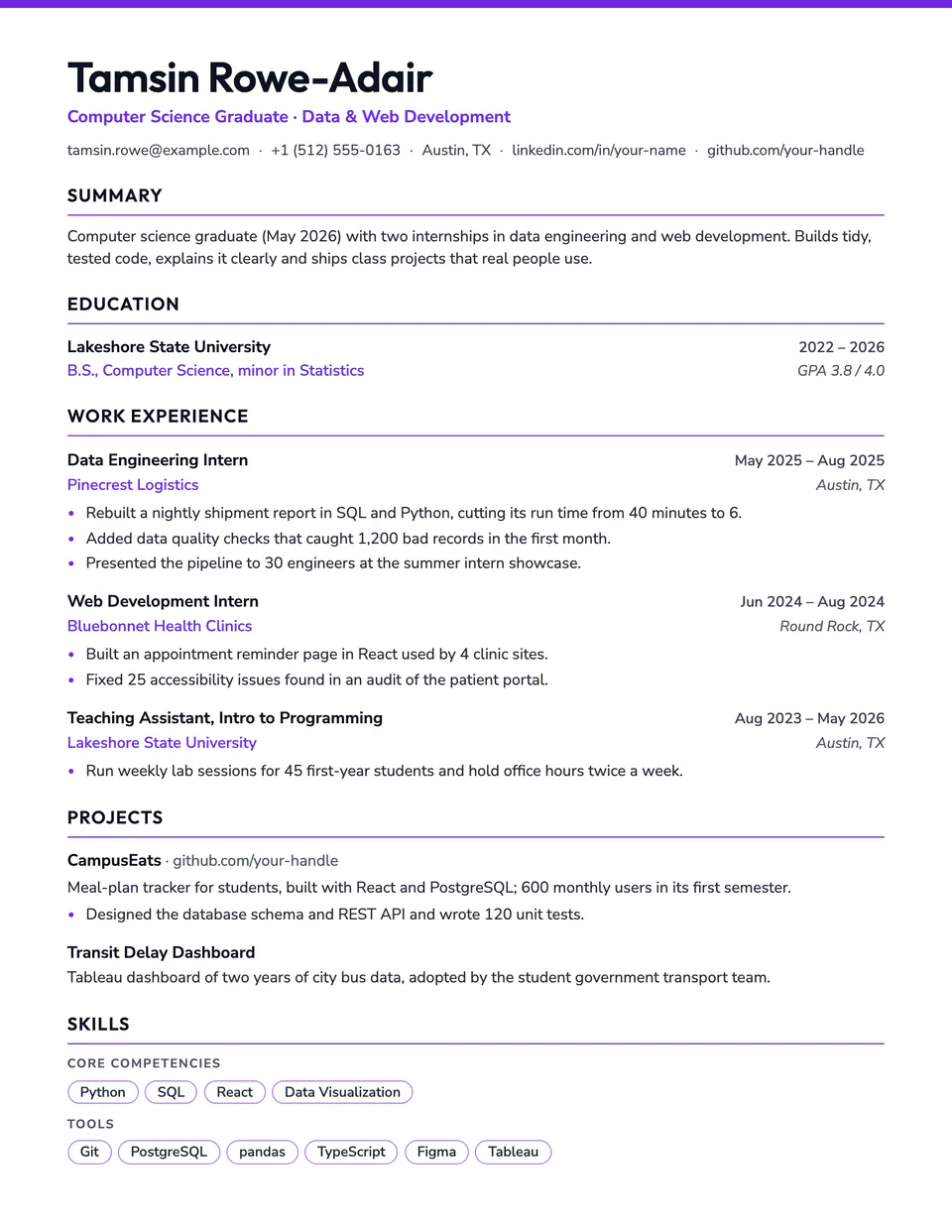
Campus
Education, projects and placements up front, for students and graduates.
Cover letters and referees
In Australia, applications usually include a cover letter and a resume, tailored to each job. The Victorian Government says the letter should be no more than one page and cover the job title and where you saw the ad, why you want this job and employer, how your skills and experience match the requirements, and that you are available for an interview. Ruubu's cover letter generator drafts one from your resume and the ad.
Referees matter more than in many countries. Ballarat's guide asks for at least two employment-related referees with their name, position, relationship to you, phone and email, and says not to list friends. Speak to referees before naming them and tell them about the job so they are ready for the call.[1][2]
Where to find jobs in Australia
The Australian Government's Workforce Australia site has a job search. Private job boards such as SEEK, Indeed and LinkedIn list many roles too.[5]
Applying from abroad
The Department of Home Affairs says that if you want to come to Australia to work, you will need a visa that suits the work you intend to do. Start from the official Working in Australia page. Visa holders can use VEVO (Visa Entitlement Verification Online) to send proof of their visa conditions to employers.
The Victorian Government's advice for skilled migrants is to relate your background to Australia where you can: mention that your qualifications have been assessed as equivalent to an Australian degree, list an Australia-based referee if possible (someone you meet through networking, unpaid work experience or volunteering) and use Australian spelling. If your resume is in another language, Ruubu's resume translation gives you a draft to review.[1][6][7]
Common mistakes on Australian resumes
- Cutting a solid career down to one page and losing the detail Australian employers look for.
- Adding date of birth, marital status or a photo out of habit.
- Leaving out referees without saying they are available on request.
- Skipping the key selection criteria response when the ad asks for one.
- Using American spelling throughout.
- Attaching certificates and transcripts the ad did not ask for.
Frequently asked questions
- Should I put a photo on an Australian resume?
- No. The University of Queensland's employability guidance says a resume should not include your photograph unless you are applying to be a model, and lists marital status, gender, religion and date of birth among the other details to leave out. Australian anti-discrimination protections cover characteristics such as race, sex and age, so let your experience speak instead.
- How long should a resume be in Australia?
- Longer than in the US. The Victorian Government says Australian employers generally prefer two to four pages, because they want a detailed picture of your experience and skills, and the City of Ballarat asks for two to three. If you are a graduate, a shorter resume is fine. Keep the detail on recent, relevant roles and consolidate older ones at the bottom.
- Do I list referees on my resume in Australia?
- Usually yes. List two or three referees at the end, with name, position, relationship to you, phone and email, or write that they are available upon request. Choose employment-related referees, such as a previous manager, not friends. Always ask permission first and tell them about the job. A local Australian referee helps if you have recently arrived.
- What are key selection criteria?
- They are the requirements an employer, often a government agency or council, uses to assess applicants. When the ad asks for them, write a separate response that takes each criterion in turn and backs it with a specific example from your experience. The City of Ballarat warns that an application without this response may be treated as incomplete.
- Should I mention my visa on my resume?
- It can help when your past jobs are overseas. To work in Australia you need a visa that suits the work you intend to do, and Home Affairs' VEVO service lets visa holders send proof of their visa conditions to employers. A short line in the cover letter is enough; never overstate what your visa allows.
Sources
Statements about rules and official guidance rely on these pages. We opened and read each source ourselves on the date shown.
- [1]How to apply for a job in Melbourne · Live in Melbourne, Victorian Governmentliveinmelbourne.vic.gov.au/work/find-a-job-in-melbourne/how-to-apply-for-a-job-in-melbourne ·
- [2]Local Government Employment Application Tool · City of Ballaratballarat.vic.gov.au/sites/default/files/2019-08/Employment-Application-Tool.pdf ·
- [3]How to write a great resume · EAIT Employability, The University of Queenslandwww.eait.uq.edu.au/employability/blog/2021/10/how-to-write-a-great-resume ·
- [4]Preventing discrimination in your workplace · Australian Human Rights Commissionhumanrights.gov.au/know-your-rights/rights-of-individuals/workplace-rights/preventing-discrimination-in-your-workplace ·
- [5]Find a job · Workforce Australia, Australian Governmentwww.workforceaustralia.gov.au/individuals/jobs/search ·
- [6]Working in Australia · Department of Home Affairsimmi.homeaffairs.gov.au/visas/working-in-australia ·
- [7]Check conditions online (VEVO) · Department of Home Affairsimmi.homeaffairs.gov.au/visas/already-have-a-visa/check-visa-details-and-conditions/check-conditions-online ·
Keep reading
Applying for a job in Australia?
Check your resume for free, then tailor it and your cover letter to the ad you are answering.