Country guide
Irish CV format: how to write a CV for jobs in Ireland
Irish employers ask for a CV and, often, a short letter of application. The format is close to the British one, but the rules behind it are Irish: the Employment Equality Acts, EU free movement and the Irish employment permit system. This guide covers the conventions and the official sources behind them.
What is the standard CV format in Ireland?
An Irish CV is one to two pages long. There is no set format, but it normally covers personal details, education, work experience with the most recent job first (volunteering included), language skills and interests. Add a photo only if an application form asks for one, and leave out details such as age or civil status that equality law protects.[1][2]
Irish CV conventions at a glance
| Topic | Usual in Ireland |
|---|---|
| Name of the document | CV (curriculum vitae). "Resume" is understood but rarely used. |
| Length | One to two pages. |
| Photo | Not expected. Supply one only if the application form asks for it. |
| Personal details | Name, phone, email and location. Age, civil status, family status and nationality relate to protected grounds and are best left out. |
| Order | Most recent experience first, including volunteering; then education, languages and interests. |
| Dates | Month and year for each role and qualification. |
| Language | English, unless the advert asks for another language. |
| Cover letter | A letter of application that highlights your personal qualities and relevant experience. |
| References | Have copies of references and qualifications ready; EURES guidance says to include them with a letter of application. |
| Europass | An EU-wide CV format; EURES describes it as a tool for transparency of skills. A tailored CV in the usual Irish layout is what the guidance describes. |
Layout and structure: what goes where
EURES, the EU's job mobility portal, sums up the Irish approach: no set format, one to two pages, and an account of you, your work experience and your qualifications. In practice that means a reverse-chronological CV in one column.
| Section | What to include | Tip |
|---|---|---|
| Personal details | Name, mobile number, email, county or city, LinkedIn URL. | No date of birth, photo or civil status. |
| Profile | Two to four lines on who you are and what you are looking for. | Write it for this role, in the employer's own words. |
| Work experience | Job title, employer, location, dates, three to five achievements. | Most recent first. Include relevant volunteering. |
| Education | Qualification, institution, year, and results where they help. | Give the Irish equivalent for foreign qualifications. |
| Languages and skills | Languages with level, software, licences, certifications. | List the tools the advert names, exactly as named. |
| Interests | Brief, and only if they say something useful about you. | One line is plenty. |
To see the structure filled in for a real job title, browse resume examples by role, for instance the accountant example.
Photo and personal data: what Irish equality law says
The Employment Equality Acts protect nine grounds: gender, civil status, family status, sexual orientation, age, religious belief, membership of the Traveller community, race and disability. The Workplace Relations Commission explains that the legislation covers all aspects of work, including recruitment, and that a person trying to get a job can bring a claim.
The Irish Human Rights and Equality Commission gives examples from recruitment: asking for a date of birth at interview, asking a candidate whether they are single, advertising for a "young and dynamic person" or for "Irish only" candidates. The race ground covers nationality, colour and ethnicity. Because these details are not supposed to influence a hiring decision, there is no reason to put them on your CV. The same logic applies to a photo, which EURES says you only need to supply when an application form requests one.[1][2][3][4][5][6]
A skeleton Irish CV
A short outline for a mid-career applicant. All data is placeholder text.
Personal details
[Name Surname]
Cork · +353 87 xxx xxxx · your-name@example.com
linkedin.com/in/your-name
Profile
Customer support lead with five years in software companies. Builds help-desk processes and trains new hires. Seeking a team-lead role in Cork or remote.
Work experience
Jun 2022 – Present · Customer Support Lead, [Company], Cork
Rebuilt the help-centre articles behind the most common tickets; trained six new agents.
Jan 2020 – May 2022 · Support Agent, [Company], Dublin
2019 · Volunteer tutor, [Charity], Cork
Education
2019 · BA Business and Languages, [University]
Languages and skills
English (native) · French (B2) · Zendesk · Salesforce · Full driving licence
Example with placeholder details, not a real person
Figures are illustrative. Use only results you can explain at interview.
How to write an Irish CV in six steps
- 01
Start from the job advert
Mark the skills, tools and qualifications the employer asks for. The job description keyword matcher lists the terms your CV does not mention yet.
- 02
Choose a plain one-column layout
One to two pages, clear headings, a standard font. No photo unless an application form requests one.
- 03
Keep personal details minimal
Name, phone, email, location and a LinkedIn link. Leave out date of birth, civil or family status and nationality.
- 04
List experience most recent first
Job title, employer, month and year, then concrete achievements. Add volunteering that shows relevant skills.
- 05
Tailor it to the posting
Reorder bullets so the employer's priorities come first; optimise your resume for one job to do it from the advert itself.
- 06
Check before you send
Run the free CV checker, proofread, and send it with a letter of application before the closing date.
Templates that suit Irish applications
Photo-free layouts that keep the structure above. All designs are in the template gallery.
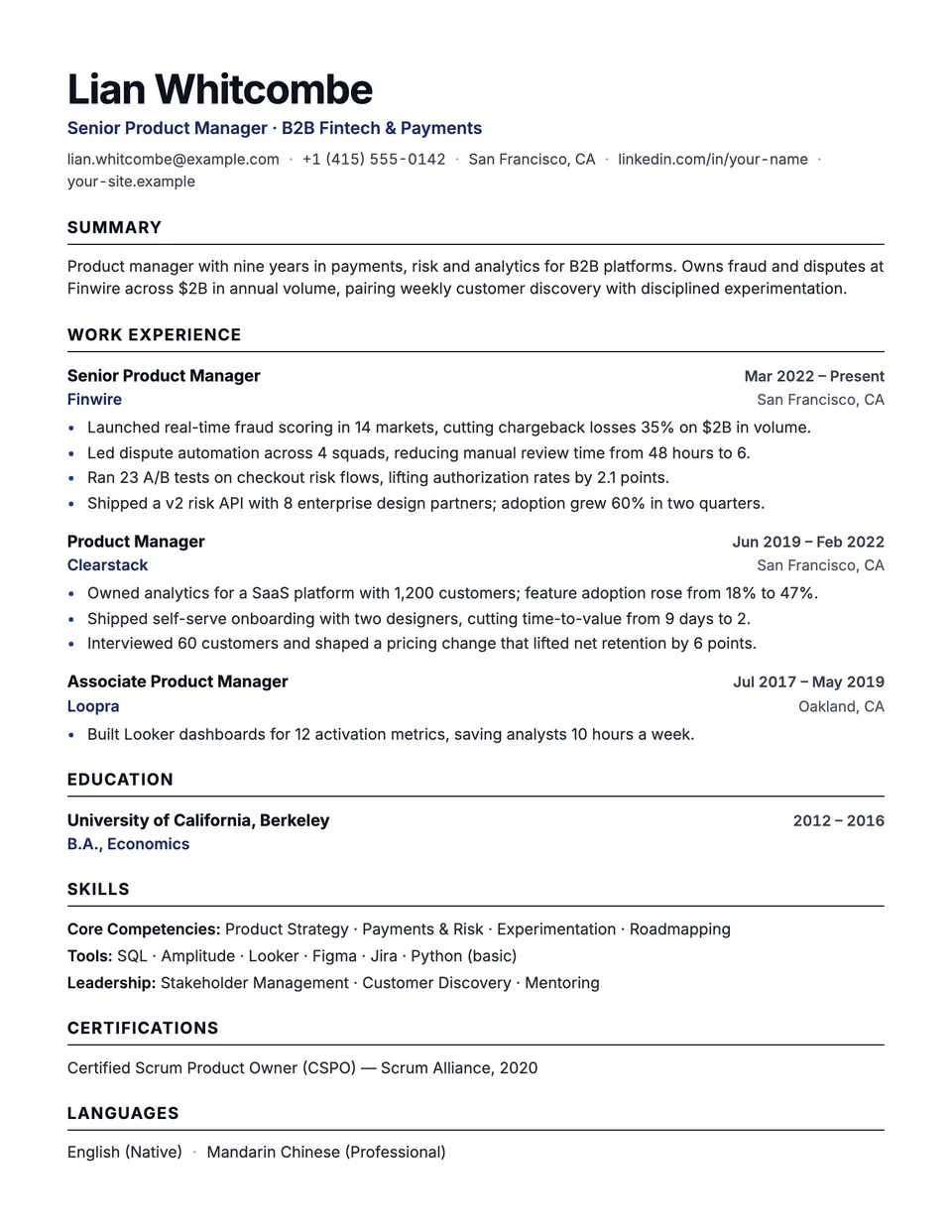
Beacon
A calm single-column design for most private-sector and multinational roles.
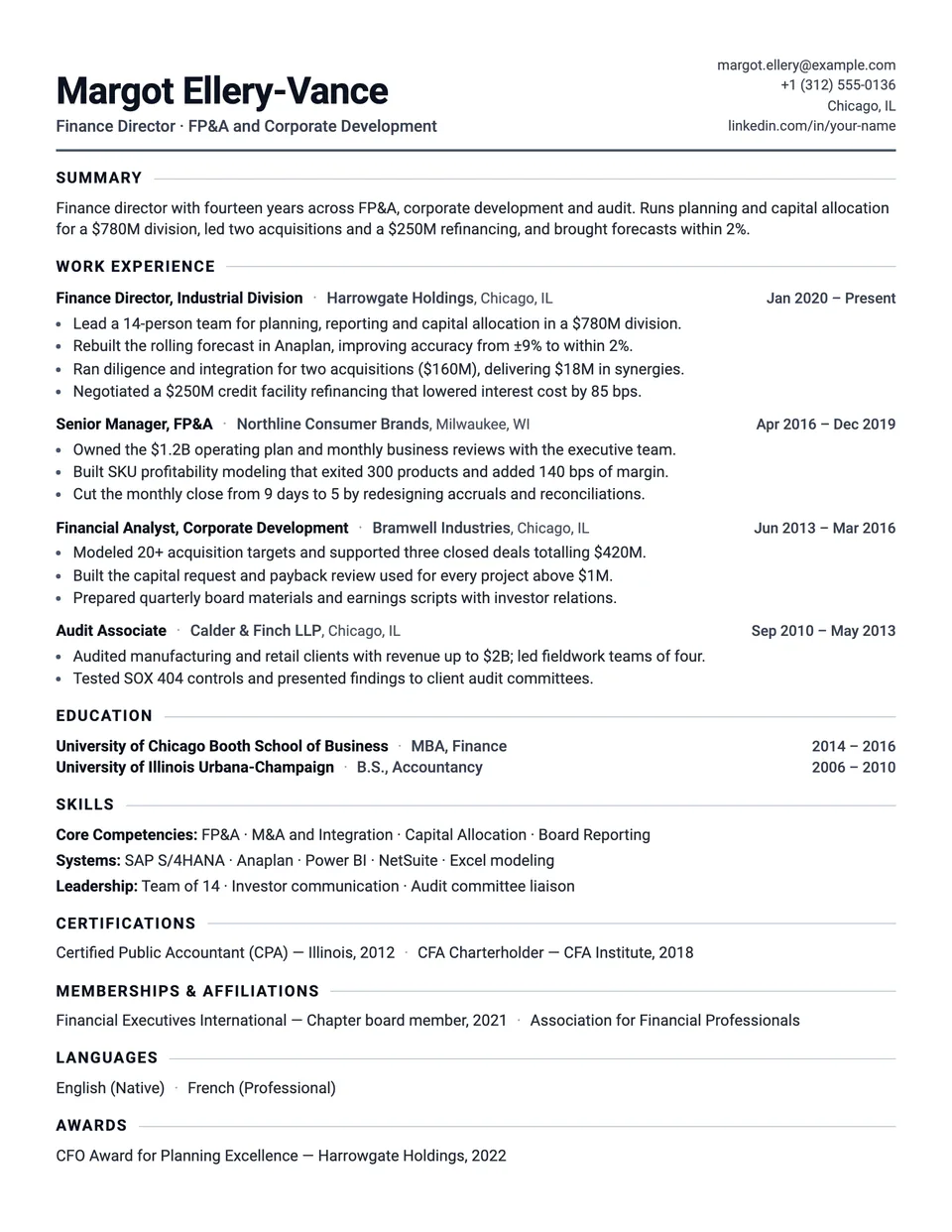
Tempo
Dense and tidy, for fitting a long career into a short CV without shrinking the font.
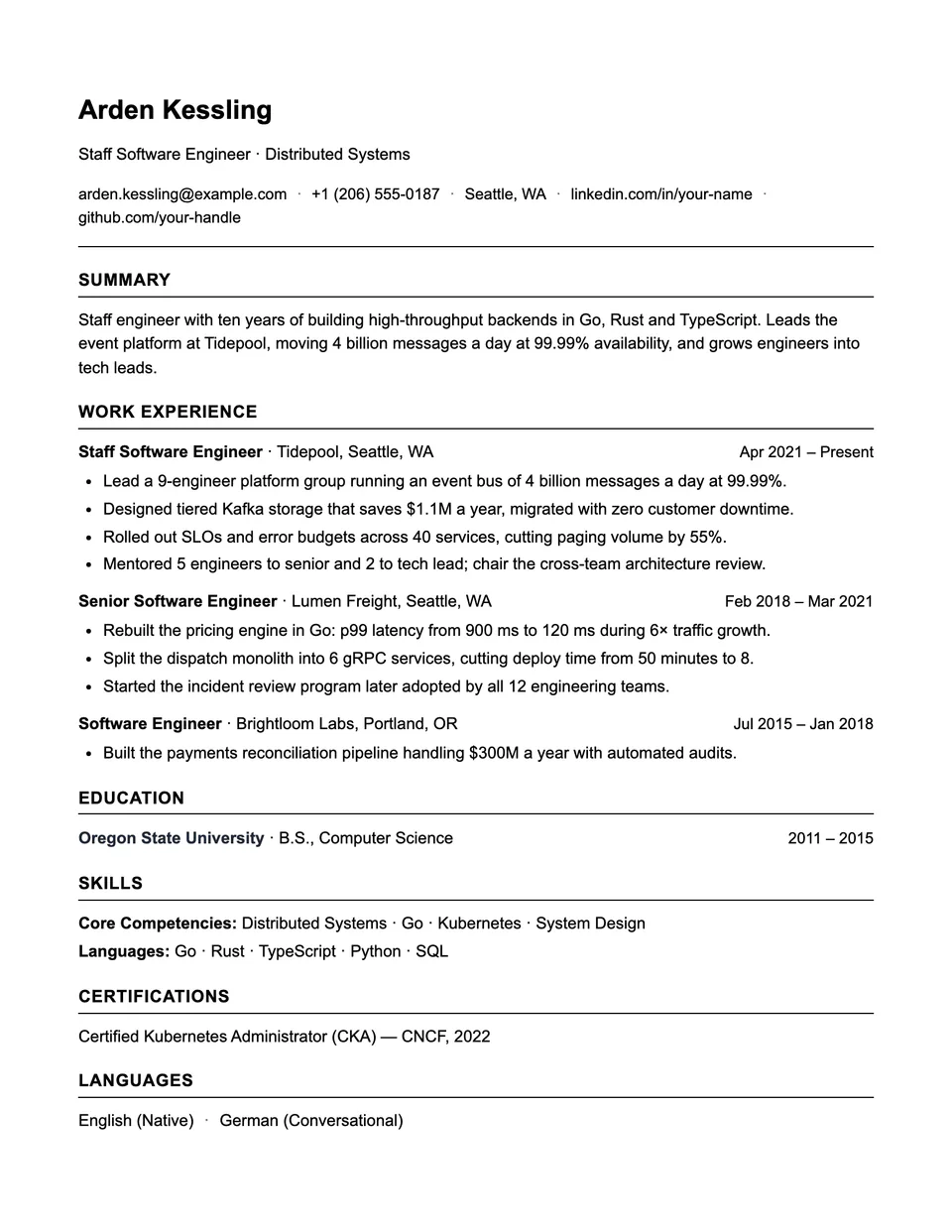
ATS Plain
The plainest layout, for large employers and recruitment agencies that screen CVs through online systems.
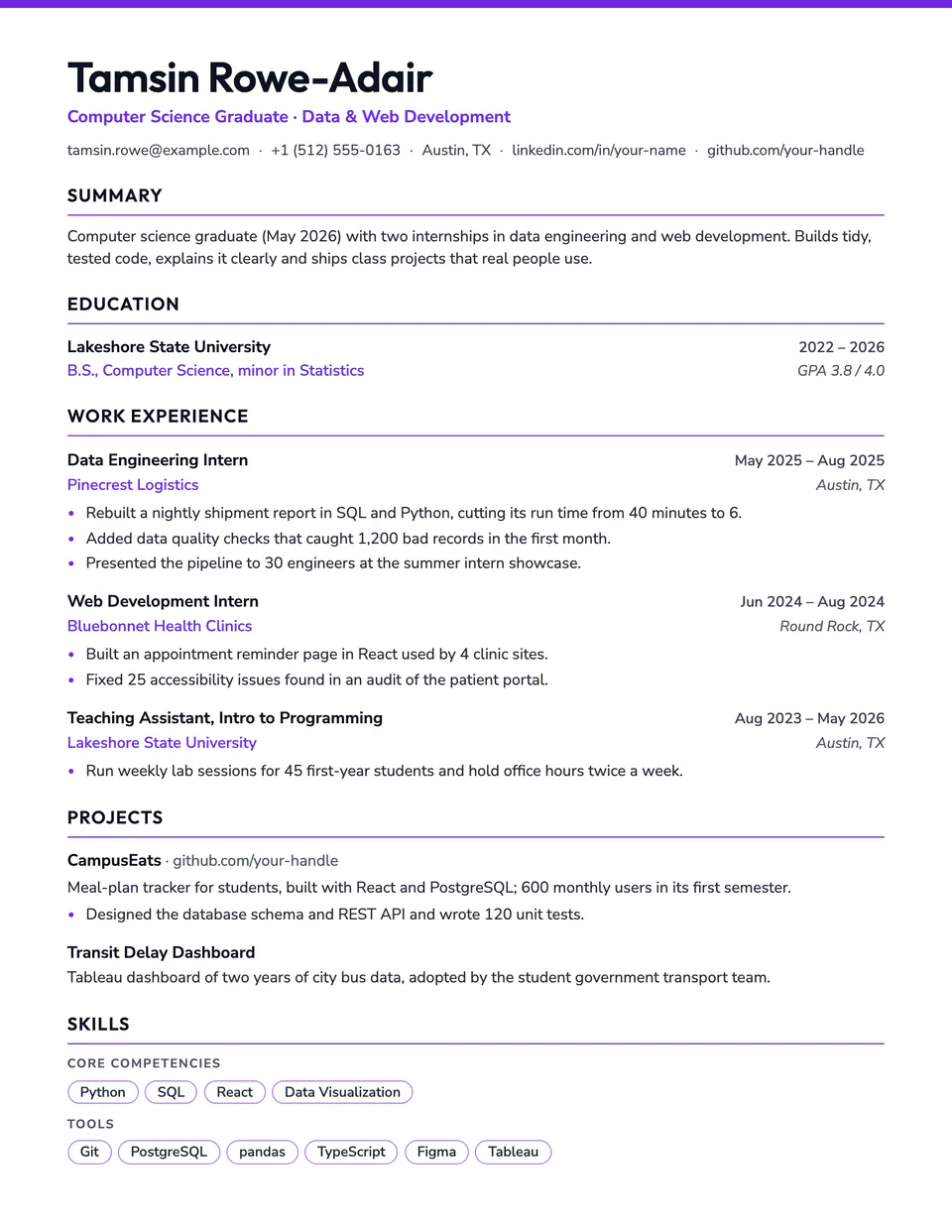
Campus
Gives education, projects and internships the same weight as jobs, for graduates and students.
The letter of application
Irish guidance on EURES describes a typed letter of application that highlights your personal qualities and relevant experience, sent with copies of qualifications and references where the employer asks for documents. Application forms must reach the employer before the closing date. If you have heard nothing after about four weeks, EURES says it is reasonable to phone the company.
Keep the letter to one page, name the role, and connect two or three of your achievements to what the advert asks for. The cover letter generator drafts one from the job advert in the same design as your CV, and interview prep builds practice questions for the same role.[1]
Where to find jobs in Ireland
Ireland's public employment service is Intreo: vacancies are available through any Intreo office and on the public job portal JobsIreland. Civil and public service roles are advertised on publicjobs.ie. Private boards such as IrishJobs.ie, Jobs.ie, Indeed and LinkedIn also list many Irish roles. Licensed private recruitment agencies cannot charge job seekers for the basic service of registering.[1][7]
Applying from abroad
EU and EEA nationals have the right to live and work in Ireland without a work permit. A non-EEA national, unless exempt, must hold a valid employment permit; the Department of Enterprise lists the types, including the Critical Skills and General Employment Permit. Each application must include a contract of employment signed by both parties, so the job offer comes first. Check the department's employment permits pages for current eligibility.
For foreign qualifications, NARIC Ireland, hosted by Quality and Qualifications Ireland, publishes free comparability statements that place many foreign awards on the Irish National Framework of Qualifications. The decision to recognise a qualification rests with the employer, or with the relevant body for regulated professions. Put the NFQ level next to your original degree title and keep certified translations of your documents ready.[1][8][9][10]
Common mistakes on Irish CVs
- Adding a photo, date of birth or civil status by habit from another country.
- Going beyond two pages instead of cutting older roles to a line each.
- Listing duties rather than results.
- Leaving out volunteering that shows exactly the skill the employer wants.
- Sending one generic CV and letter to every employer.
- Missing the closing date on an application form.
Frequently asked questions
- Do I need a photo on an Irish CV?
- No. EURES guidance for Ireland says you only need to supply a photograph if an application form requests one. Photos can reveal details linked to grounds protected by the Employment Equality Acts, such as age, gender or race, which should not influence a hiring decision. Use the space for a stronger profile or another achievement.
- How long should a CV be in Ireland?
- One to two pages, according to the EURES guidance for Ireland. A graduate can usually fit everything on one page. With a longer career, keep the last ten years or so in detail and shorten older roles to a single line, so the CV stays within two pages and the most relevant experience stays on page one.
- Should I include my date of birth or marital status?
- There is no need. Age, civil status and family status are protected grounds under the Employment Equality Acts, and the Irish Human Rights and Equality Commission gives asking for a date of birth or whether someone is single at interview as examples of questions that can be discriminatory. Keep personal details to name, contact information and location.
- Can I use a UK CV for jobs in Ireland?
- Mostly, yes: the two formats are close, with no photo and the most recent job first. Check the details, such as local qualification equivalents, and replace UK-specific terms. If you need a work permit, say so clearly. Our UK CV format guide covers the British conventions for comparison.
- Is a Europass CV accepted in Ireland?
- Europass is an EU-wide format, and EURES describes it as a tool for making skills transparent across countries. You can send one, but EURES's Ireland guidance describes a one-to-two-page CV with no set format, and a CV tailored to the specific job in the usual Irish layout fits that description more closely.
Sources
Statements about rules and official guidance rely on these pages. We opened and read each source ourselves on the date shown.
- [1]Living and working conditions: Ireland · European Commission, EURESeures.europa.eu/living-and-working/living-and-working-conditions/living-and-working-conditions-ireland_en ·
- [2]Protected grounds · Irish Human Rights and Equality Commissionwww.ihrec.ie/your-rights/protected-grounds ·
- [3]Age discrimination at work · Irish Human Rights and Equality Commissionwww.ihrec.ie/your-rights/age/work ·
- [4]Civil status discrimination at work · Irish Human Rights and Equality Commissionwww.ihrec.ie/your-rights/civil-status/work ·
- [5]Race discrimination at work · Irish Human Rights and Equality Commissionwww.ihrec.ie/your-rights/race/work ·
- [6]Equal status and employment equality · Workplace Relations Commissionwww.workplacerelations.ie/en/what_you_should_know/equal-status-and-employment-equality/ ·
- [7]JobsIreland · JobsIreland.iewww.jobsireland.ie/ ·
- [8]Employment permits · Department of Enterprise, Tourism and Employmententerprise.gov.ie/en/what-we-do/workplace-and-skills/employment-permits/ ·
- [9]Employment permit types · Department of Enterprise, Tourism and Employmententerprise.gov.ie/en/what-we-do/workplace-and-skills/employment-permits/permit-types/ ·
- [10]Recognition of foreign qualifications (NARIC Ireland) · Quality and Qualifications Irelandwww.qqi.ie/recognition-of-foreign-qualifications ·
Keep reading
Applying in Ireland? Check your CV first
The free checker reviews contact details, headings, dates and length, and lists what to fix before you send it.