Profile AnalysisResume CheckerSkills ExtractorTemplatesExamplesBlogPricing
Log inAnalyzeAnalyze my profile

Your profile, through a recruiter's eyes. A resume that sounds like you. Jobs that actually fit.

We never post to your LinkedIn or share your data.

Product

  • Features
  • Resume builder
  • Profile analysis
  • Resume checker
  • Resume templates
  • Design & formatting
  • Cover letters
  • Pricing

Tools

  • Resume tailoring
  • AI resume polish
  • Job matches
  • Interview prep
  • Job tracking
  • Translation
  • Skills extractor
  • QR sharing

Company

  • Help center
  • Blog
  • Contact

Legal

  • Privacy Policy
  • Terms of Service
  • Refund Policy

Ruubu is an independent product, not affiliated with LinkedIn. Your data is never posted to your accounts or sold.

© 2026 Ruubu. All rights reserved.· English (US)
Secure checkout — powered by Stripe
  • Visa
  • Mastercard
  • American Express
  • Discover
  • Apple Pay
  • Google Pay
All articles
Resume

US Resume vs. CV: Understanding the Key Differences

Learn the crucial distinctions between a resume and a CV to tailor your job application effectively.

The Ruubu Team·Jun 30, 2026·6 min read
US Resume vs. CV: Understanding the Key Differences

On this page

  1. 01What is a Resume?
  2. 02What is a CV?
  3. 03Key Differences: Resume vs CV
  4. 04When to Use a Resume
  5. 05When to Use a CV
  6. 06Formatting Your Resume or CV
  7. 07Tailoring Your Document for Success
  8. 08Conclusion: Choose Wisely
  9. 09Additional Resources

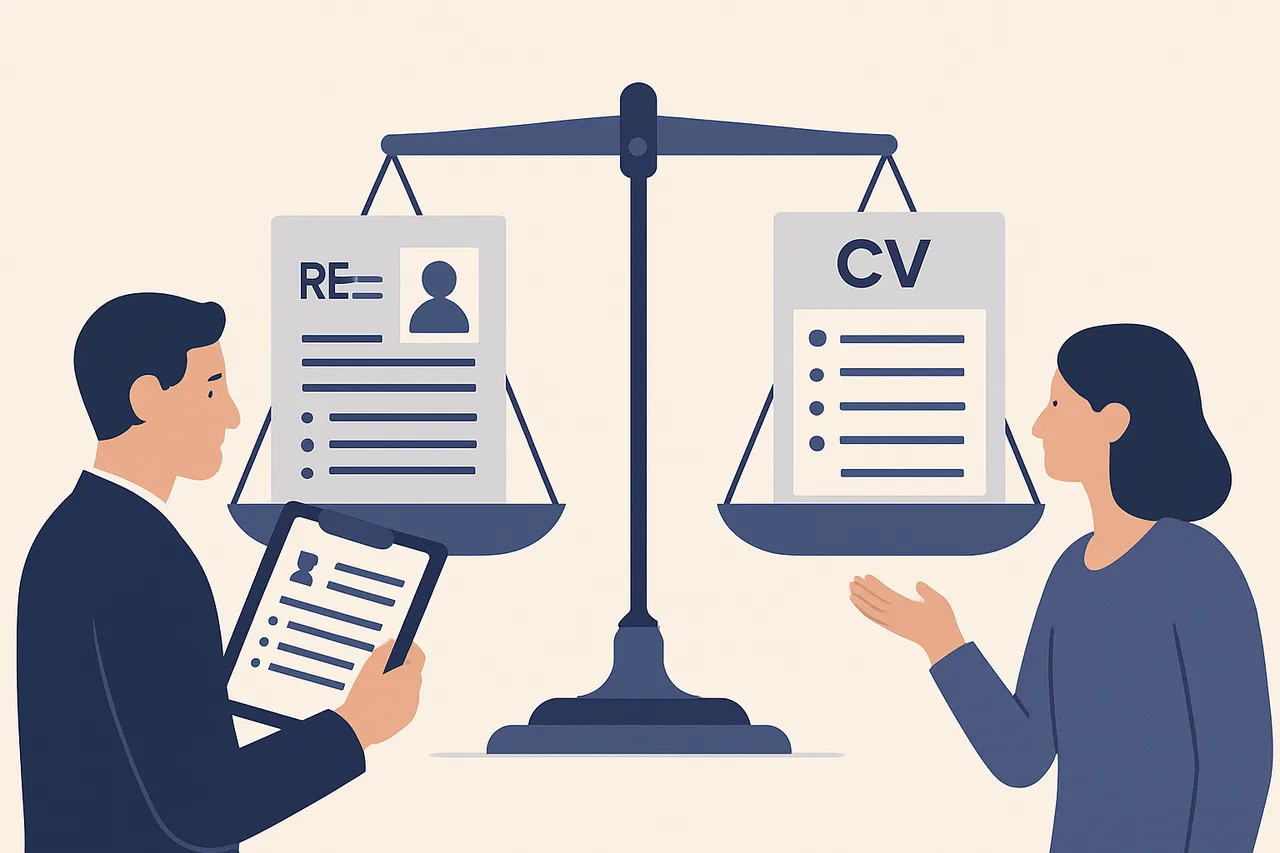
When it comes to job applications in the United States, understanding the difference between a resume and a CV (curriculum vitae) is essential. While both documents serve the purpose of showcasing your qualifications, they differ significantly in format, length, and intended use. Knowing how to effectively use each can enhance your chances of landing your desired position.
US Resume vs. CV: Understanding the Key Differences

What is a Resume?

A resume is a concise document that summarizes your skills, experience, and education relevant to a specific job application. Typically, resumes are one to two pages long and are tailored to match the requirements of the job. The goal is to highlight your most relevant achievements and experiences to capture the attention of hiring managers quickly. A well-crafted resume should include sections such as a summary statement, work experience, education, and skills. Each section should be designed to showcase your qualifications in a clear and compelling manner.

In crafting a resume, it’s vital to focus on quantifiable achievements rather than merely listing duties. For instance, instead of stating that you "managed a team," you could say you "led a team of 10 to achieve a 20% increase in sales over six months." This approach not only demonstrates your capabilities but also provides concrete evidence of your contributions.

What is a CV?

A curriculum vitae, or CV, provides a comprehensive overview of your academic and professional history. Unlike a resume, a CV can be several pages long and includes detailed sections such as publications, research experience, teaching experience, and professional affiliations. CVs are commonly used in academic, research, and medical fields where a complete picture of your background is necessary. Additionally, a CV allows you to present a more in-depth view of your qualifications, which can be particularly important in fields that value academic credentials and extensive experience.

When creating a CV, it is essential to include all relevant details, including honors, awards, and certifications, as these elements can significantly enhance your profile. For example, if you have published articles or contributed to significant research projects, these should be prominently featured to illustrate your expertise and commitment to your field.
Key Differences: Resume vs CV

Keep reading

Related articles

How to Write a Teacher Resume: What Schools Look For
Resume

How to Write a Teacher Resume: What Schools Look For

5 min read
Resume Header Examples: What to Include and What to Drop
Resume

Put this advice to work on your own profile.

Run a free analysis and see exactly where your profile stands — then fix it in minutes.

Analyze your profile
  • Length: Resumes are typically 1-2 pages, while CVs can be multiple pages.
  • Purpose: Resumes are for job applications; CVs are for academic positions.
  • Content: Resumes focus on skills and experience; CVs include comprehensive academic history.
  • When to Use a Resume

    Resumes are appropriate for most job applications across various industries, including business, technology, marketing, and healthcare. If you are applying for a position that is not academic or research-focused, a resume is your best bet. Tailoring your resume to the specific job description is crucial, as employers appreciate seeing how your skills align with their needs. Moreover, including keywords from the job posting can help your resume pass through Applicant Tracking Systems (ATS) that many companies use to filter candidates.

    In addition to tailoring your resume, consider the overall presentation. A clean, professional layout with consistent formatting can make a significant difference. Use bullet points for clarity, and ensure that your contact information is easily accessible at the top of the document.

    When to Use a CV

    CVs are primarily used in academic, educational, and research roles. If you are applying for a position at a university, a research institute, or a medical facility, a CV is often the required document. Additionally, if you are seeking fellowships or grants, a CV allows you to present a thorough background of your qualifications. In these contexts, a CV not only lists your achievements but also demonstrates your commitment to your field through ongoing education, research contributions, and professional development.

    Moreover, when applying for academic positions, it’s beneficial to include a teaching philosophy statement or a research statement in your CV, as these documents provide insight into your approach and values as an educator or researcher.

    Formatting Your Resume or CV

    Both resumes and CVs should be well-structured and easy to read. Here are some formatting tips:

    • Use clear headings to define each section.
    • Choose a professional font and size.
    • Ensure consistent formatting throughout the document.

    Tailoring Your Document for Success

    Regardless of whether you are creating a resume or a CV, tailoring the content to the specific job or field is essential. For resumes, emphasize the experiences and skills that directly relate to the job description. For CVs, include all relevant academic accomplishments and experiences that may impress an academic or research committee. This approach not only shows your qualifications but also your genuine interest in the position.

    Additionally, consider seeking feedback from peers or mentors in your field. They can provide valuable insights and suggestions that can help you refine your document further, ensuring it stands out in a competitive job market.

    Conclusion: Choose Wisely

    Understanding the differences between a resume and a CV is crucial for any job seeker. By recognizing when to use each type of document and how to tailor them effectively, you can significantly enhance your job application strategy. Whether you are using a resume or creating a CV, make sure your document presents your qualifications clearly and compellingly. And if you need assistance in crafting an impressive resume, consider using our free resume builder to create your standout document.

    Utilize our free resume builder to create your standout document.

    Start Building Now

    Additional Resources

    For those looking to delve deeper into the process of creating effective resumes and CVs, there are numerous resources available. Websites that specialize in career advice often provide templates and tips tailored to specific industries. Additionally, local career centers or online workshops can offer personalized guidance. If you're interested in a more structured approach, consider exploring tools that help streamline the resume creation process, such as our CV maker, which offers templates and suggestions based on your field.

    Moreover, engaging in professional networking can be invaluable. Platforms like LinkedIn not only allow you to connect with industry professionals but also provide insights into what employers are looking for in resumes and CVs. Following industry leaders and participating in relevant discussions can enhance your understanding and help you stay updated on best practices.

    Resume Header Examples: What to Include and What to Drop

    5 min read
    Crafting a Software Engineer Resume That Passes ATS
    Resume

    Crafting a Software Engineer Resume That Passes ATS

    5 min read