Profile AnalysisResume CheckerSkills ExtractorTemplatesExamplesBlogPricing
Log inAnalyzeAnalyze my profile

Your profile, through a recruiter's eyes. A resume that sounds like you. Jobs that actually fit.

We never post to your LinkedIn or share your data.

Product

  • Features
  • Resume builder
  • Profile analysis
  • Resume checker
  • Resume templates
  • Design & formatting
  • Cover letters
  • Pricing

Tools

  • Resume tailoring
  • AI resume polish
  • Job matches
  • Interview prep
  • Job tracking
  • Translation
  • Skills extractor
  • QR sharing

Company

  • Help center
  • Blog
  • Contact

Legal

  • Privacy Policy
  • Terms of Service
  • Refund Policy

Ruubu is an independent product, not affiliated with LinkedIn. Your data is never posted to your accounts or sold.

© 2026 Ruubu. All rights reserved.· English (US)
Secure checkout — powered by Stripe
  • Visa
  • Mastercard
  • American Express
  • Discover
  • Apple Pay
  • Google Pay
All articles
Resume

Should You Add a Photo to Your Resume? Insights & Laws

Discover whether to include a photo on your resume with insights on US laws and recruiter preferences.

The Ruubu Team·Jun 30, 2026·5 min read
Should You Add a Photo to Your Resume? Insights & Laws

On this page

  1. 01The Legal Landscape Surrounding Resume Photos
  2. 02Recruiter Perspectives on Resume Photos
  3. 03When Is It Appropriate to Include a Photo?
  4. 04Best Practices for Including a Photo on Your Resume
  5. 05Alternatives to Including a Photo on Your Resume
  6. 06Conclusion: Making an Informed Decision

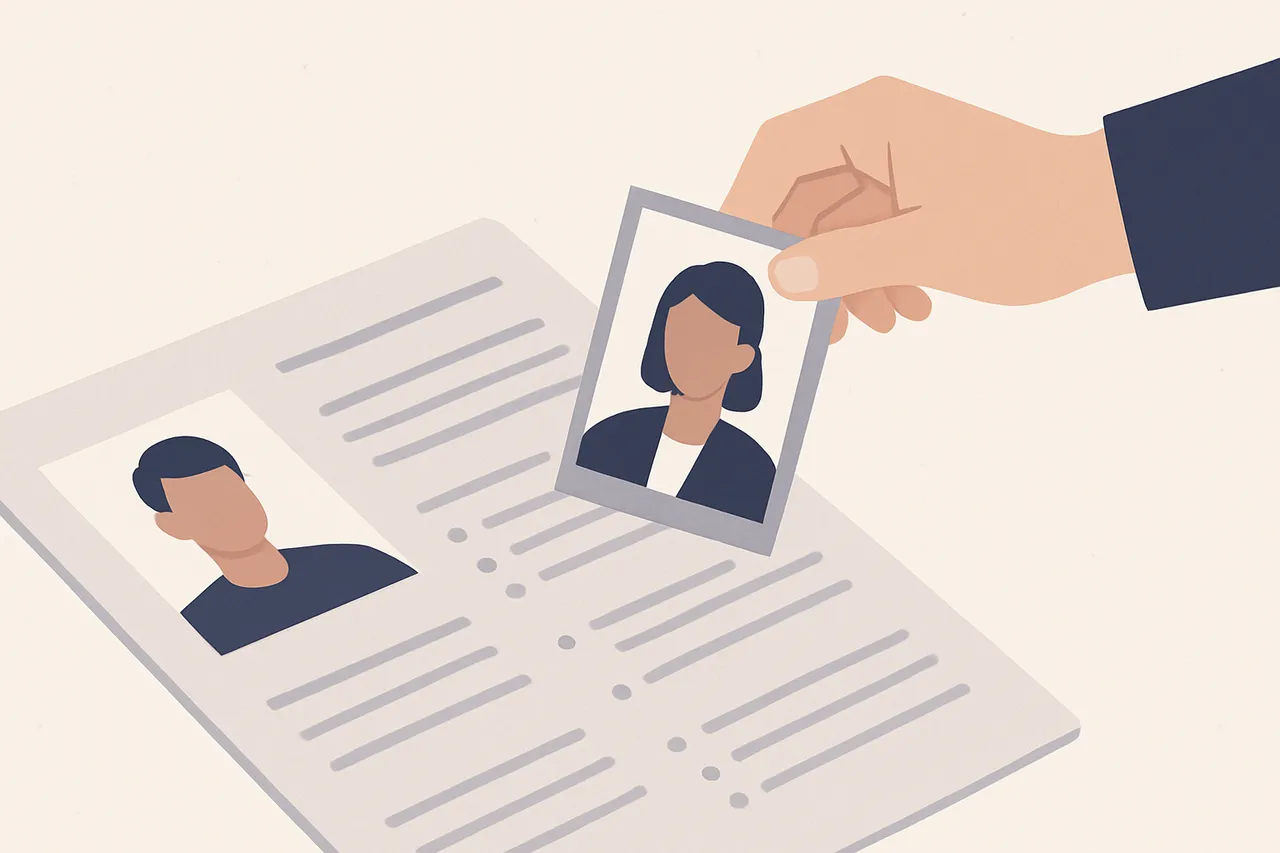
Including a photo on your resume can be a contentious topic. While it may seem like a great way to add a personal touch, there are legal and practical factors to consider. In some cases, including a photo can lead to unconscious bias, while in others, it might help you stand out. This article explores the implications of adding a photo on your resume, including relevant US laws and insights from recruiters.
Should You Add a Photo to Your Resume? Insights & Laws

The Legal Landscape Surrounding Resume Photos

In the United States, there are no specific federal laws prohibiting or mandating the inclusion of a photo on your resume. However, anti-discrimination laws such as Title VII of the Civil Rights Act of 1964 are crucial to consider. These laws protect against discrimination based on race, color, religion, sex, or national origin. Including a photo can inadvertently introduce bias, making it crucial to weigh the risks. Understanding these laws is paramount as they set the foundation for fair hiring practices.

Some states have additional protections that may affect your decision. For instance, California has laws against discrimination based on gender identity and sexual orientation. Including a photo could potentially lead to biases that would violate these protections. Understanding these nuances is essential, especially in a diverse job market where inclusivity is increasingly prioritized. The implications of bias are not just legal; they can also impact your reputation and future job prospects.

Recruiter Perspectives on Resume Photos

Recruiters generally have mixed feelings about including a photo on resumes. Here are some insights from industry professionals:

  • Many recruiters prefer a clean, text-only resume to focus on qualifications.
  • Some believe that a photo can help humanize the candidate, creating a connection.
  • Others argue that photos can introduce bias and should be avoided.

Keep reading

Related articles

How to Write a Teacher Resume: What Schools Look For
Resume

How to Write a Teacher Resume: What Schools Look For

5 min read
Resume Header Examples: What to Include and What to Drop
Resume

Put this advice to work on your own profile.

Run a free analysis and see exactly where your profile stands — then fix it in minutes.

Analyze your profile

A survey conducted by the National Resume Writers' Association indicated that about 60% of hiring professionals prefer resumes without photos. This highlights the importance of understanding your audience when crafting your resume. Preferences can vary significantly across industries, so it’s beneficial to tailor your resume to the specific role and company culture. For example, creative industries may have different standards compared to corporate environments.

When Is It Appropriate to Include a Photo?

While many recruiters advise against including a photo, there are specific situations where it may be acceptable or even beneficial. Here are some scenarios to consider:

  1. If you're applying for a job in a creative field (e.g., modeling, acting, or design) where appearance is part of the job.
  2. If you are in a country or industry that commonly includes photos on resumes, adapting to local norms can be advantageous.
  3. If you have a strong online presence (e.g., LinkedIn) and want to create a cohesive personal brand.

In these cases, the inclusion of a photo might enhance your application rather than detract from it. However, it's still essential to ensure that the photo aligns with the professional standards of the industry. Researching the norms of your target industry can provide clarity on whether a photo is appropriate.

Best Practices for Including a Photo on Your Resume

If you decide to include a photo on your resume, follow these best practices to ensure it adds value rather than detracts from your application.

  • Use a professional headshot that reflects your industry standards.
  • Ensure the photo is high quality and well-lit, with a plain background.
  • Keep your attire professional and relevant to the job you're applying for.

In addition to these practices, consider placing your photo in a corner of the resume rather than front and center, allowing your qualifications to remain the focal point. This subtle approach can help maintain the professionalism of your resume while still providing a personal touch. Remember that your qualifications and experiences should always take precedence.

Alternatives to Including a Photo on Your Resume

If you're unsure about including a photo, there are alternatives that can still create a personal connection without the risks associated with images.

  • Include a personalized cover letter that conveys your personality.
  • Utilize your LinkedIn profile, where you can include a photo and expand on your experience.
  • Consider a portfolio website to showcase your work visually.

These alternatives can effectively communicate who you are as a candidate while minimizing the potential for bias associated with photos. In fact, a well-crafted cover letter can often provide more insight into your personality and fit for the role than a photo.

Conclusion: Making an Informed Decision

Ultimately, the decision to include a photo on your resume should be made with careful consideration of the legal landscape, industry norms, and recruiter preferences. While a photo can help you stand out in some scenarios, it's essential to remain aware of the potential for bias. If you choose to forego the photo, focus on crafting a compelling resume using our free resume builder and explore different templates to find the perfect fit for your career. Remember, your resume is your first impression; make it count! A well-structured resume that highlights your skills and experiences can often speak louder than any image.

Take your resume to the next level with our free tools!

Get Started

Resume Header Examples: What to Include and What to Drop

5 min read
Crafting a Software Engineer Resume That Passes ATS
Resume

Crafting a Software Engineer Resume That Passes ATS

5 min read